English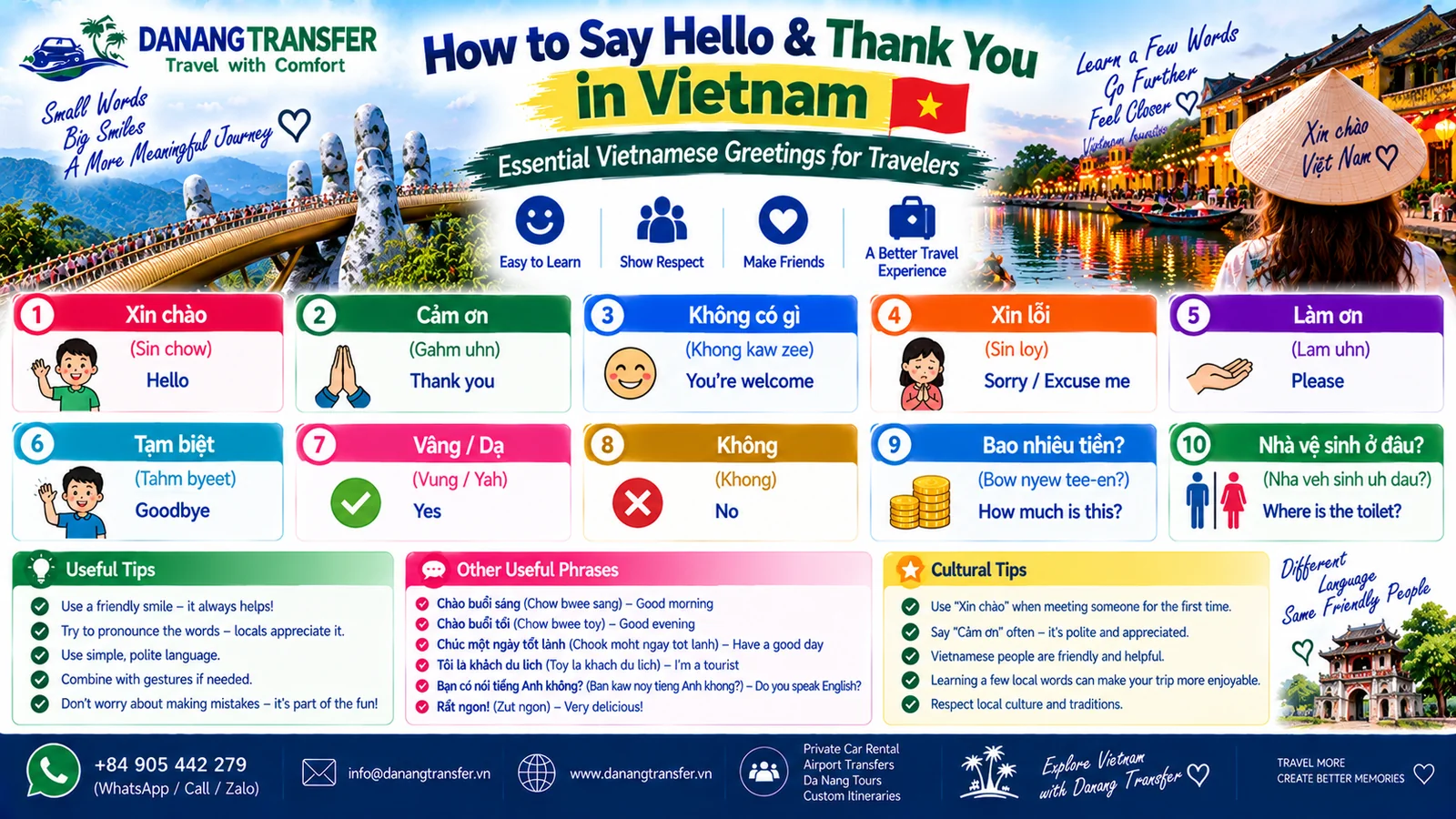
Vietnam is not just known for its stunning landscapes, delicious food, and friendly people — it’s also a country where manners and respect are deeply rooted in daily life.
Whether you’re arriving at Da Nang Airport, exploring Hoi An Ancient Town, or cruising through Ha Long Bay, knowing how to say simple words like “Hello” and “Thank you” in Vietnamese can turn every interaction into a warm and memorable moment.
Let’s learn how to speak like a local — even just a few words can bring a big smile!
👋 How to Say “Hello” in Vietnamese
1. “Xin chào” (sin chow) — The Universal Greeting
This is the most common way to say hello in Vietnamese.
It’s polite, simple, and works for any situation — whether you’re greeting your hotel receptionist, a local driver, or a street vendor.
Example:
“Xin chào, tôi là Sarah.” → “Hello, I’m Sarah.”
“Xin chào, rất vui được gặp bạn!” → “Hello, nice to meet you!”
💡 Tip: When you say “xin chào,” smile and make eye contact. Vietnamese people really appreciate warmth and friendliness.

2. Using “Chào” + Title (More Natural for Locals)
Vietnamese people often greet each other by combining the word “chào” with an age/gender-based title. This shows respect and social awareness — something locals deeply value.
| Title | Used for | Example | English Meaning |
|---|---|---|---|
| Anh | older man | Chào anh | Hello, sir |
| Chị | older woman | Chào chị | Hello, ma’am |
| Em | younger person | Chào em | Hi (younger friend) |
| Cô / Chú | older woman / man | Chào cô, chào chú | Hello, auntie / uncle |
| Bạn | neutral/friend | Chào bạn | Hi, friend |
✨ Using “chào anh” or “chào chị” instead of just “xin chào” instantly sounds more natural and polite — locals will love it!
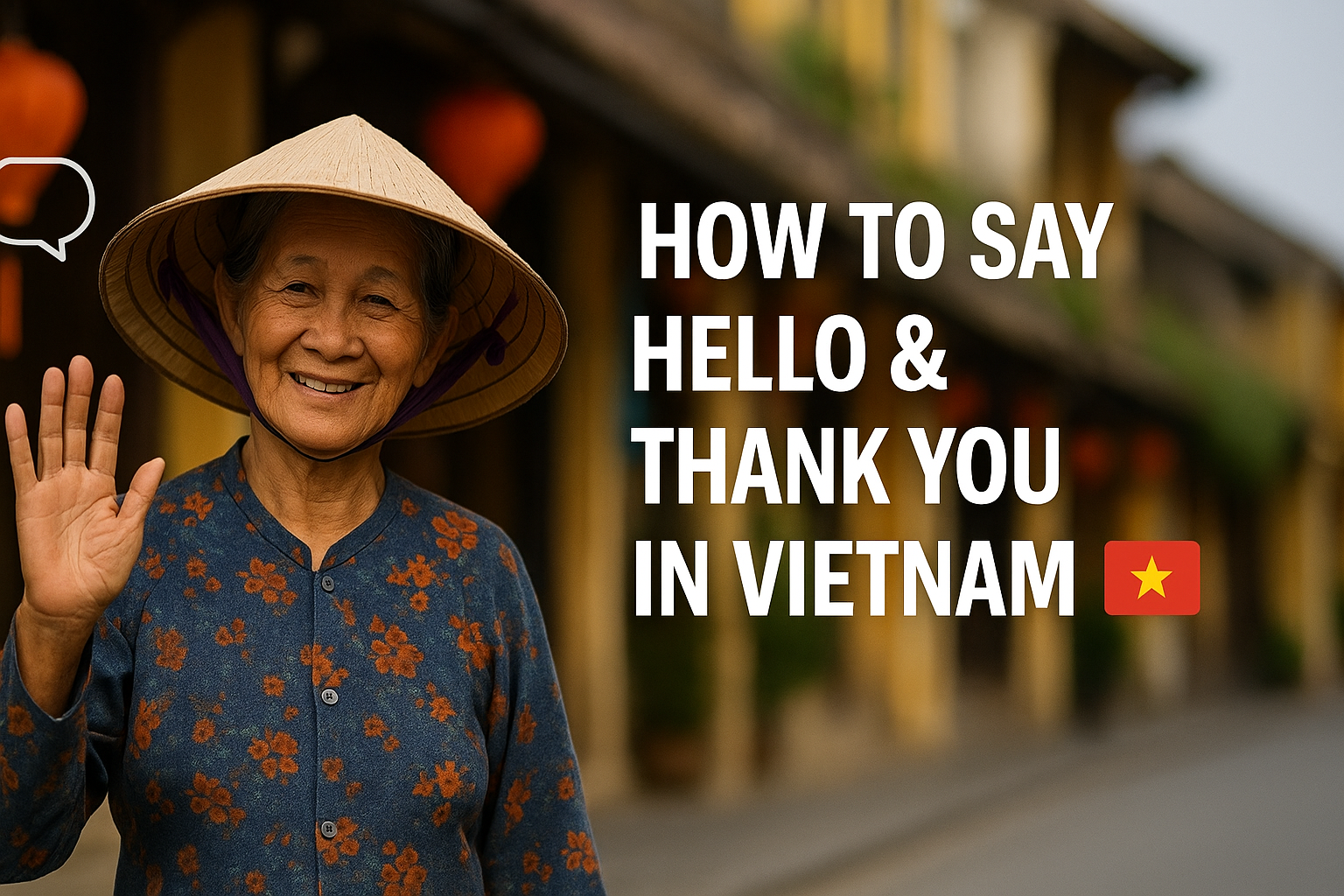
🙏 How to Say “Thank You” in Vietnamese
1. “Cảm ơn” (gahm un) — The Standard “Thank You”
This phrase is easy and universally understood across Vietnam.
Examples:
“Cảm ơn anh” → Thank you, sir.
“Cảm ơn nhiều nhé!” → Thank you very much!
You can emphasize gratitude by adding “nhiều” (meaning a lot) — “Cảm ơn nhiều!”
2. How to Reply to “Thank You”
When someone says “Cảm ơn”, you can reply with:
| English | Vietnamese | Meaning |
|---|---|---|
| You’re welcome | Không có gì | It’s nothing / You’re welcome |
| No problem | Dạ, không sao | It’s okay |
| My pleasure | Rất vui được giúp bạn | Glad to help you |
💡 Tip: Say it with a friendly smile. In Vietnam, body language is often more important than perfect pronunciation!

🌸 Extra Polite Expressions for Travelers
Vietnamese culture values respect, humility, and kindness — especially when interacting with elders or service providers.
Here are a few more phrases that travelers find useful:
| English | Vietnamese | Pronunciation | When to Use |
|---|---|---|---|
| Excuse me | Xin lỗi | sin loy | To get attention or apologize |
| Please | Làm ơn | lam un | When asking politely |
| Yes | Vâng / Dạ | vuhng / yah | Polite “yes” (southern people often say “dạ”) |
| No | Không | khom | Politely decline |
| Goodbye | Tạm biệt | tahm bee-et | When leaving |
| Good morning | Chào buổi sáng | chow boo-ee sahng | Before noon |
| Good night | Chúc ngủ ngon | chook ngoo ngon | Before bedtime |
| How much? | Bao nhiêu tiền? | bao nyew tee-en | While shopping |
| Very delicious! | Ngon quá! | ngon wah | At restaurants |
🗣️ Pronunciation Tips
Vietnamese is a tonal language, which means that tone affects meaning.
However, don’t worry — locals are patient and appreciate your effort even if you don’t get it perfect.
Here are some easy pronunciation rules:
-
“Xin chào” → “sin chow” (soft “ch” sound like in “cheese”)
-
“Cảm ơn” → “gahm un” (don’t stress too hard on the tones)
-
“Không có gì” → “khong kaw zee” (soft and gentle)
🎧 If you want to sound authentic: Try listening to locals and repeating slowly — they’ll often help correct you with a smile.
💬 Real-Life Situations to Use These Phrases
✈️ At the Airport or Hotel
-
“Xin chào, tôi có đặt phòng.” → Hello, I have a reservation.
-
“Cảm ơn bạn, phòng rất đẹp!” → Thank you, the room is lovely!
🍜 At a Local Restaurant
-
“Xin lỗi, cho tôi thực đơn.” → Excuse me, may I have the menu?
-
“Cảm ơn nhiều, món này ngon quá!” → Thank you, this dish is delicious!
🚗 On a Private Car Tour
-
“Chào anh, cảm ơn vì chuyến đi tuyệt vời!” → Hello sir, thank you for the wonderful trip!
👉 (If you rent a car with an English-speaking driver from Danang Transfer, try this to impress your driver!)
🏞️ When Meeting Locals
-
“Xin chào, bạn đến từ đâu?” → Hello, where are you from?
-
“Cảm ơn, người Việt Nam rất thân thiện.” → Thank you, Vietnamese people are so friendly.

🎎 Cultural Etiquette When Greeting in Vietnam
-
Smile First — A warm smile is universal and the best way to start any conversation.
-
Use both hands when giving or receiving something, especially money or gifts.
-
Avoid touching heads or shoulders — these are considered private areas.
-
Do not use first names immediately — use “anh,” “chị,” or “em” as titles until invited otherwise.
-
Be humble — loud or aggressive tones can be seen as disrespectful.
✨ A small gesture of politeness can go a long way in Vietnam!
🧭 Why Learning a Few Words Matters
You don’t need to be fluent in Vietnamese to have a great trip — but knowing even a few basic words can transform your experience.
-
Locals will respect your effort and treat you more warmly.
-
You’ll find it easier to bargain, order food, or get help when lost.
-
It adds depth to your travel memories — you connect with people, not just places.
💡 Traveler Story – A Simple “Cảm ơn” That Made a Difference
One of our guests from Australia told us:
“During our trip from Da Nang to Hue, I tried saying ‘Cảm ơn nhiều’ to our driver. He smiled so big and even taught us a few more words! By the end of the trip, we were laughing and sharing stories — all because of two simple words.”
That’s the magic of local language — it breaks barriers and builds friendship.
🚐 Plan Your Trip with Local Experts in Central Vietnam
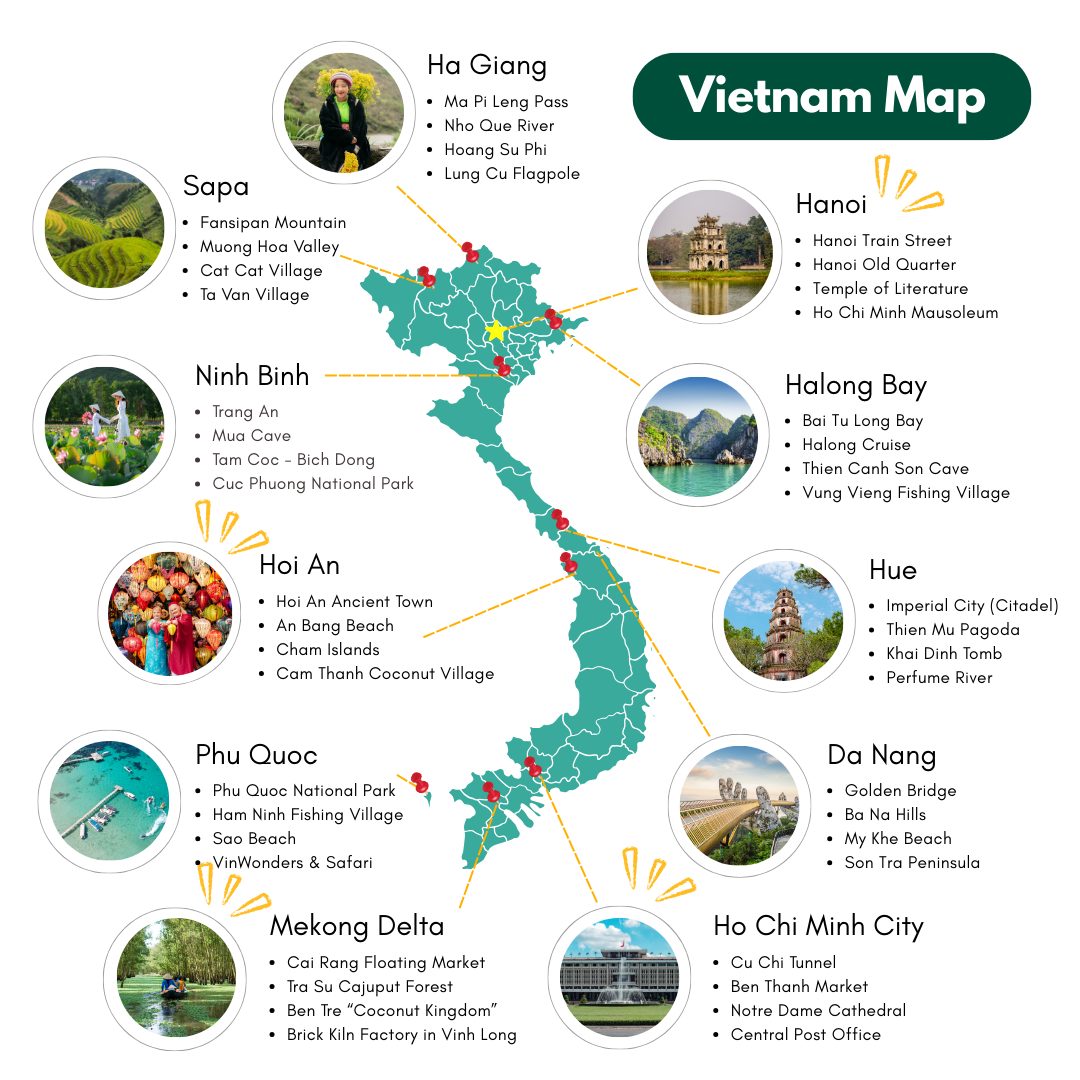
Exploring Central Vietnam — from the ancient streets of Hoi An, the coastal charm of Da Nang, to the imperial beauty of Hue — becomes even more memorable when you travel with locals who truly understand the region.
Learning a few friendly Vietnamese greetings like “Xin chào” and “Cảm ơn” will make your journey smoother and more enjoyable. But what truly elevates your experience is traveling with a professional private driver who not only speaks English but also knows the best scenic routes, authentic food stops, and hidden gems that most tourists miss.
Whether you’re heading to the Golden Bridge in Ba Na Hills, crossing the Hai Van Pass, or relaxing at Lang Co Bay, having a reliable local expert by your side ensures comfort, flexibility, and peace of mind throughout your trip.
👉 Hire an English-Speaking Driver in Vietnam
Discover personalized car services with friendly local drivers who make your travel experience effortless and insightful.
👉 How Much Does It Cost to Rent a Car in Vietnam?
Check detailed pricing, car types, and travel tips before planning your trip — transparent, affordable, and updated for 2026.
💡 Tip: Book your car service early during peak travel seasons (April–August and November–January) to secure the best rates and ensure availability for day trips or airport transfers.

🏁 Conclusion – Speak From the Heart, Not the Textbook
Vietnamese people don’t expect you to speak perfectly — they value sincerity, respect, and effort. Even a simple “Xin chào” (hello) or “Cảm ơn” (thank you) said with a smile can create a genuine connection that goes beyond words.
So don’t worry about getting every tone right. Speak from the heart, not from a textbook. Every “thank you” you say adds warmth to your journey, every greeting opens another door to local culture.
Whether you’re wandering through Hoi An’s lantern-lit streets, crossing the Hai Van Pass, or exploring Ba Na Hills, a few friendly Vietnamese phrases can turn your trip into a truly human experience — full of kindness, smiles, and unforgettable memories.
🌐 Learn more travel tips and local experiences at DanangTransfer.vn/en
📞 Need assistance or want to plan your next trip? Contact our team anytime via Hotline: +84-0905442279
💬 Travel smart. Travel local. Speak from the heart — and Vietnam will speak back to you.