English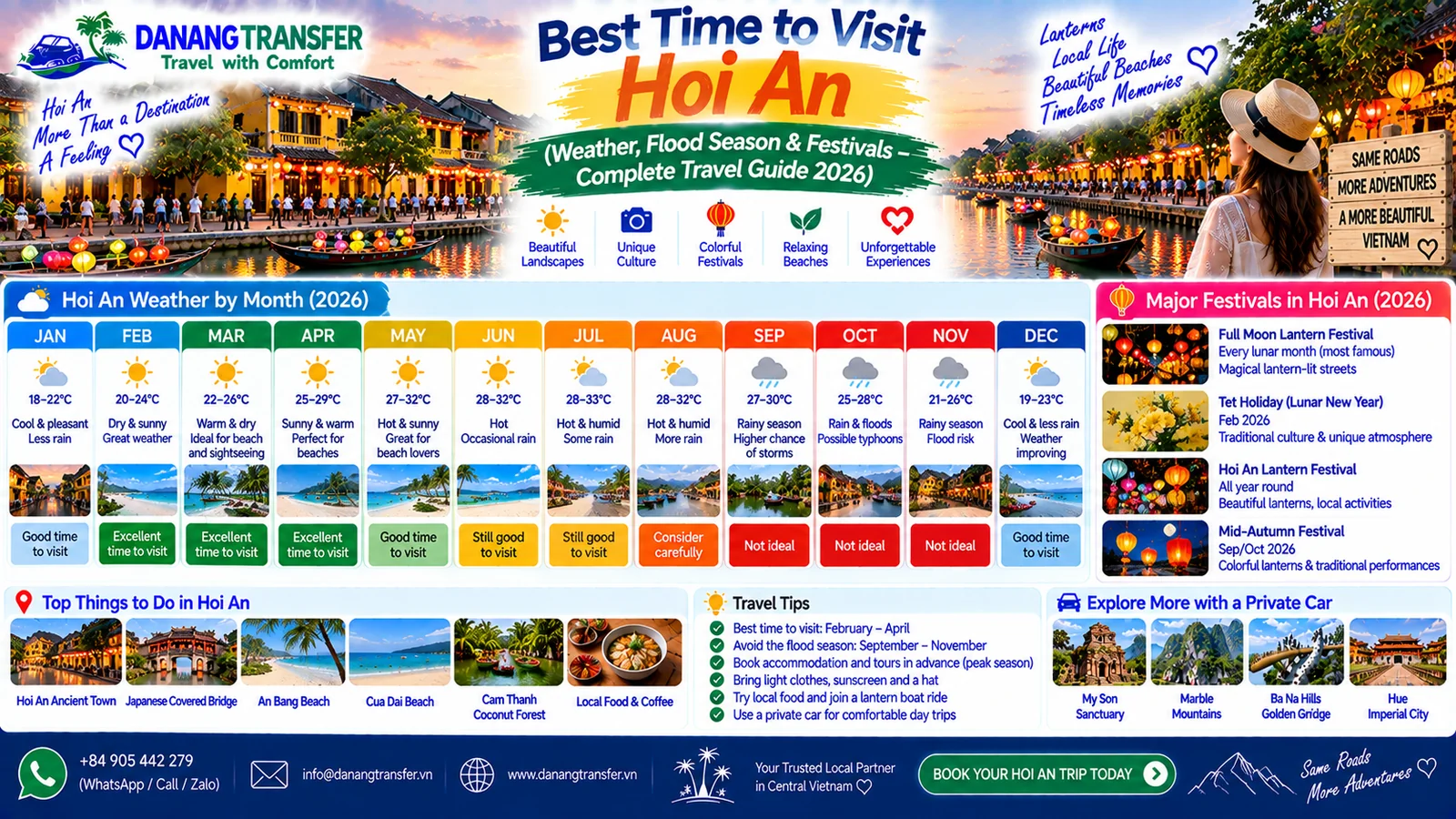
Hoi An is not just a destination — it is an experience of lantern-lit evenings, ancient architecture, peaceful rivers, and golden beaches. But to truly enjoy this UNESCO heritage town, choosing the best time to visit Hoi An is essential.
In this detailed guide, Danang Transfer explains:
-
Hoi An weather by month
-
Flood season and how it affects travel
-
Best months for beaches and sightseeing
-
Cultural festivals and special events
-
Practical travel tips from local experts
Whether you are planning a romantic getaway, family vacation, or photography trip, this guide will help you make the right decision.

1. Overview of Hoi An Weather
Hoi An has a tropical monsoon climate with two distinct seasons:
☀️ Dry Season: February – August
🌧️ Rainy Season: September – January
Average yearly temperature: 20°C – 35°C (68°F – 95°F)
Humidity: High throughout the year
Sunshine hours: Strongest from April to August
Because Hoi An is located near the coast and along the Thu Bon River, it is more vulnerable to seasonal flooding compared to inland cities.

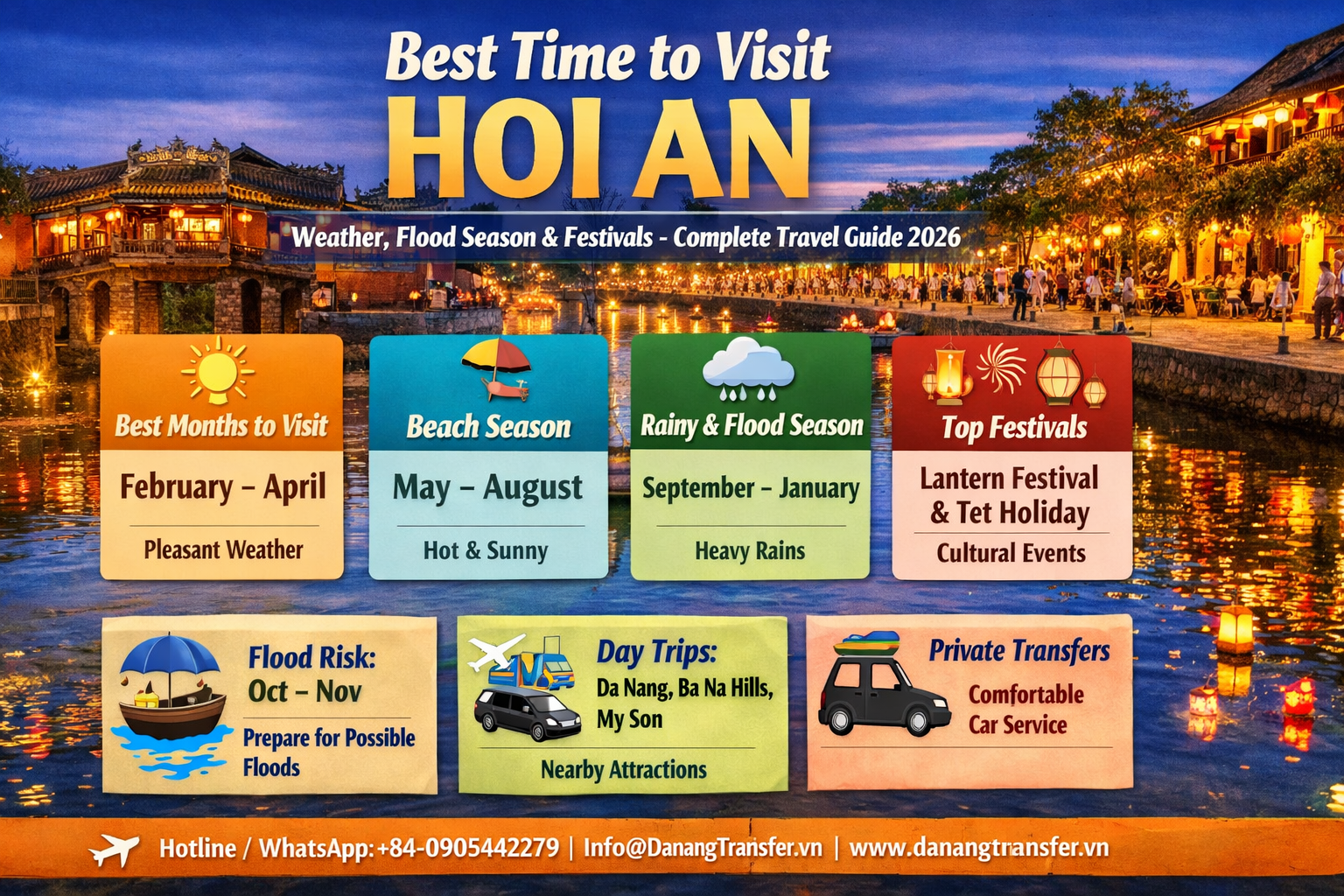
2. Best Overall Time to Visit Hoi An (February – April)
If you want the perfect balance of good weather, comfortable temperatures, and beautiful scenery, February to April is the best time to visit Hoi An.
Why February – April Is Ideal:
-
Mild temperature (22–30°C)
-
Low rainfall
-
Clear blue skies
-
Comfortable humidity
-
Perfect lighting for photography
This is the most pleasant period for exploring:
-
Hoi An Ancient Town
-
Japanese Covered Bridge
-
Riverside cafés and lantern streets
-
Cycling to rice fields and countryside villages
-
Relaxing at An Bang Beach
It is also perfect for day trips from Da Nang or visits to My Son Sanctuary.
👉 Local Advice: This is peak season. Book hotels and private transfers at least 1–2 weeks in advance.

3. Summer in Hoi An (May – August) – Hot but Vibrant
Summer is sunny, energetic, and ideal for beach lovers.
Weather Conditions:
-
Temperature: 30–35°C
-
Strong sunshine
-
Very little rain
-
High UV index
Advantages:
-
Excellent beach weather
-
Clear sea for swimming
-
Perfect for visiting Ba Na Hills
-
Lively atmosphere
Disadvantages:
-
Midday heat can be intense
-
Walking tours can feel exhausting
Smart Travel Tips:
-
Explore Old Town before 10:00 AM
-
Take a break between 12:00 – 3:00 PM
-
Enjoy lantern streets in the evening
Summer is great if you combine Hoi An with Da Nang beaches.

4. Rainy Season & Flood Season (September – January)
Hoi An’s rainy season runs from September to January, with the heaviest rain typically in:
-
October
-
November
Because the town lies along the Thu Bon River, flooding can occur during heavy rain periods.
What Happens During Flood Season?
-
Water may rise in lower streets
-
Some shops temporarily close
-
Boats replace walking in certain areas
-
Transportation may be delayed
However, flooding does not happen every day during this period — it depends on storm systems and upstream rainfall.
Should You Avoid Rainy Season?
Not necessarily.
Benefits of Visiting During Rainy Season:
-
Fewer tourists
-
Lower hotel prices
-
Peaceful atmosphere
-
Dramatic photography opportunities
-
Cooler temperatures (20–25°C)
Hoi An in the rain has a unique romantic charm — lantern reflections on wet streets create stunning scenes.
👉 Important Tip: Always check weather forecasts if traveling between October and November.

Biển cửa Đại Hội An
5. Best Time to Visit Hoi An for Festivals
Hoi An becomes magical during cultural celebrations.
🌕 Hoi An Lantern Festival
Held on the 14th day of each lunar month.
During the festival:
-
Street lights are turned off
-
Thousands of colorful lanterns glow
-
Traditional music performances
-
Locals release floating candles on the river
This is one of the most unforgettable nights in Vietnam.
🎉 Tet Holiday (Vietnamese Lunar New Year)
Usually in late January or February.
During Tet:
-
Streets are decorated with flowers
-
Families gather and celebrate
-
Fireworks and traditional performances
⚠️ Note: Many businesses close during the first 2–3 days of Tet.

6. Month-by-Month Travel Overview
January
Cool, light rain possible. Quiet and peaceful.
February
Excellent weather. One of the best months.
March
Dry, sunny, comfortable temperatures.
April
Warm but still pleasant. Great for photography.
May
Hot but ideal for beaches.
June – July
Very hot. Good for seaside activities.
August
Still hot, occasional showers begin.
September
Start of rainy season.
October – November
Heavy rain & possible flooding.
December
Cooler, festive atmosphere for Christmas & New Year.

7. Best Time Based on Travel Style
🌤 First-Time Visitors
February – April
🏖 Beach Lovers
May – July
💰 Budget Travelers
October – December
📸 Photographers
February – April or Lantern Festival nights
👨👩👧 Family Travel
March – June (before extreme heat)

8. When Is the Worst Time to Visit Hoi An?
There is no truly “bad” time — but if you dislike rain or travel disruptions, avoid:
-
Late October
-
November
These months have the highest flood risk.
9. Final Recommendation from Local Experts
If you want:
-
Comfortable weather
-
Clear skies
-
Minimal rain
-
Best sightseeing experience
👉 Choose February to April.
However, every season in Hoi An offers a different beauty — sunny beaches, romantic rainy evenings, or vibrant festival nights.