English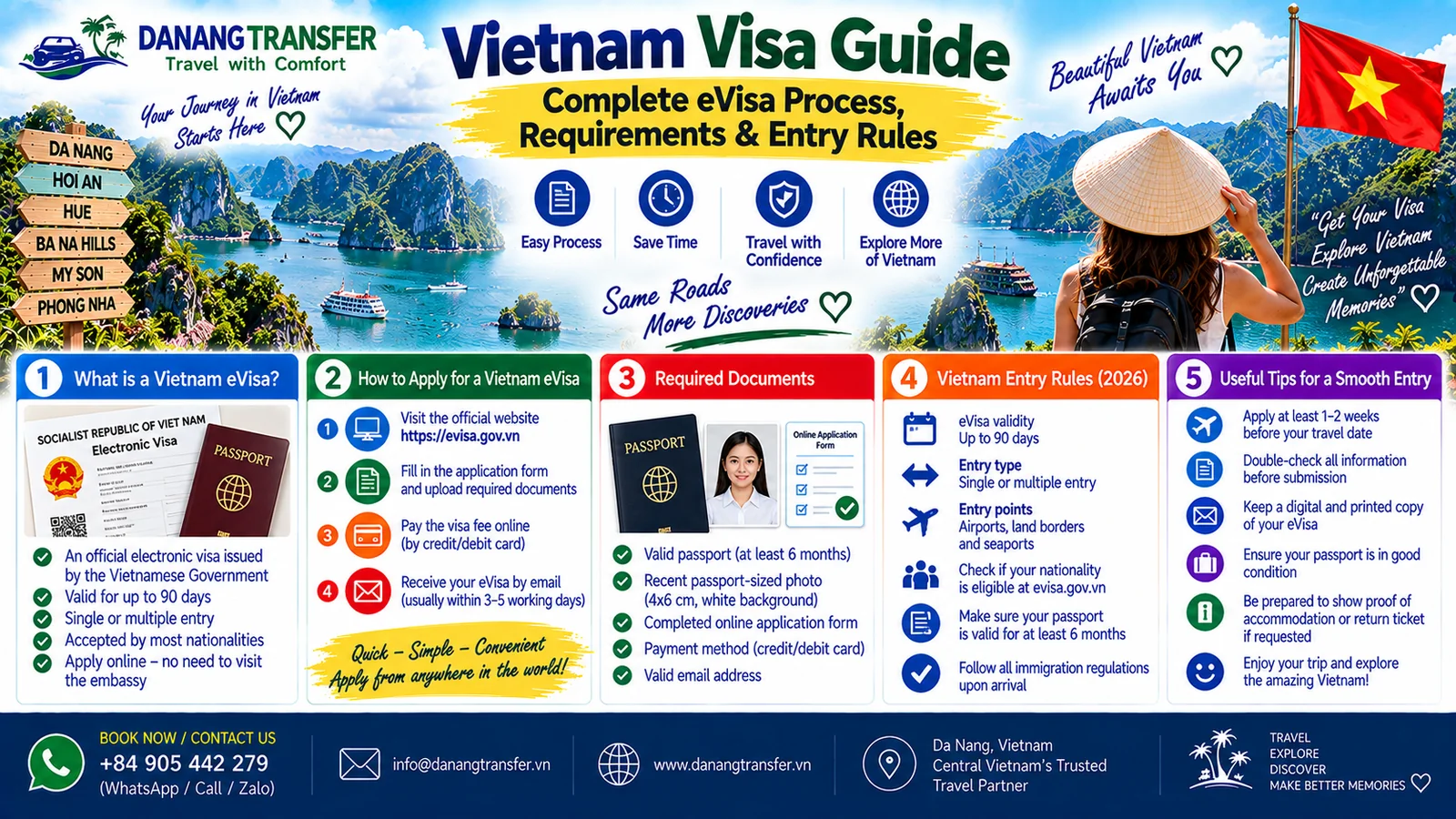
Vietnam continues to shine as one of Asia’s most attractive destinations thanks to its vibrant cities, world-class beaches, rich culture, and diverse cuisine. To welcome more international visitors, Vietnam has significantly modernized and simplified its visa system. As of 2026, travelers from over 94 countries can apply for a 90-day Vietnam eVisa fully online, while many nationalities enjoy visa-free entry with extended stays.
This comprehensive guide explains everything you need to know about traveling to Vietnam in 2026 — from visa types and eVisa procedures to entry requirements, fees, processing time, and insider tips to ensure the smoothest entry possible.

Rice fields at Muong Hoa Valley
1. Introduction: Why Vietnam’s Visa System in 2026 Is Easier Than Ever
Vietnam’s tourism sector has prioritized a streamlined visa process to support the country’s rapid growth in international arrivals. The new policy offers:
-
90-day eVisa validity (single or multiple entry)
-
Visa-free entry for many Asian and European countries
-
Simplified online process with instant confirmation
-
More entry ports (33 airports, land borders, seaports)
-
Flexible long-stay and multi-entry options
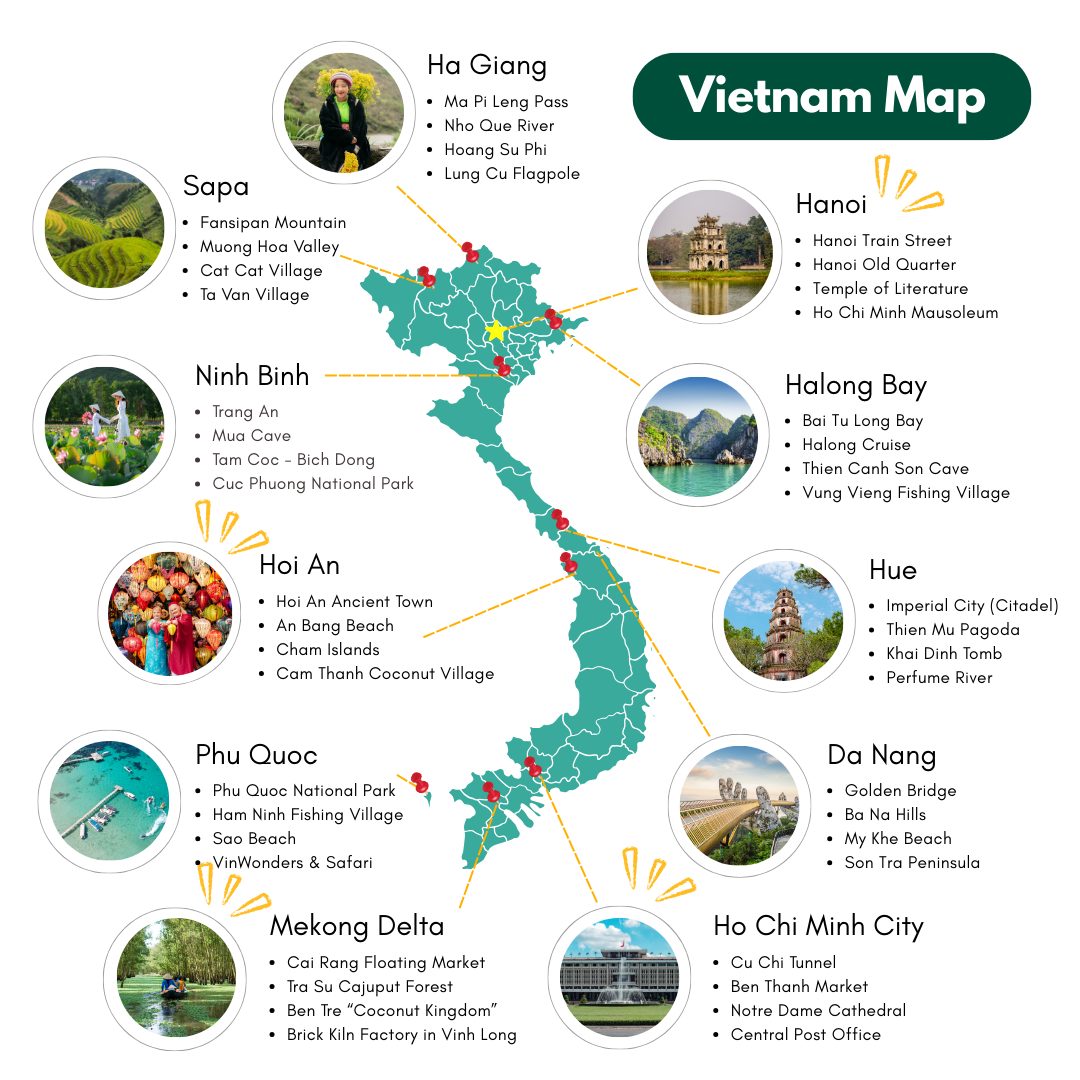
This means travelers can now plan multi-city journeys — from Da Nang, Hoi An, and Hue to Hanoi, Ninh Binh, Ha Long, Ho Chi Minh, and Mekong Delta — with greater convenience.
If you are planning a trip in 2026, this guide is the most updated source to help you navigate Vietnam’s visa procedures effortlessly.
2. What Is a Vietnam eVisa?
The Vietnam eVisa is an officially issued electronic visa that allows eligible tourists, business travelers, and short-term visitors to enter Vietnam without applying at an embassy.
Key features of the 2026 Vietnam eVisa:
-
Valid for 90 days
-
Available as single-entry or multiple-entry
-
Entire process done online
-
Issued by Vietnam Immigration Department
-
Accepted at 33 designated entry points
-
Suitable for tourism, business, conferences, visiting relatives
Once approved, the eVisa is delivered as a PDF file via email — you simply print it and present it upon arrival.
3. Link to Apply for Vietnam eVisa (Official Government Portal)
To avoid scams or unofficial brokers, travelers should only apply via the official Vietnam Immigration website:
👉 Official eVisa Application Link (Government):
https://evisa.xuatnhapcanh.gov.vn
(You can add this link on your website under a CTA button: “Apply Vietnam eVisa Now – Official Portal”)
4. Who Is Eligible for Vietnam eVisa in 2026?
Vietnam currently grants eVisa access to 94 citizenships, including major countries:
North America
-
United States, Canada
Europe
-
France, Germany, Italy, Spain, UK, Netherlands, Switzerland, Sweden, Denmark, Norway, Finland, Poland, Czech Republic, Portugal, Belgium, Austria
Asia-Pacific
-
Australia, New Zealand, Japan, South Korea, China, Hong Kong, Taiwan, Macau, Malaysia, Singapore, Philippines, India, Indonesia, Thailand
Middle East
-
UAE, Qatar, Saudi Arabia, Kuwait, Oman, Turkey
Latin America & Others
-
Brazil, Argentina, Mexico, Chile, Panama, etc.
If your country is on this list, you can apply for a Vietnam eVisa online without visiting an embassy or consulate.
5. Vietnam Visa-Free Entry (No Visa Required)
Vietnam offers visa-free entry to travelers from several countries. This makes it easy for certain nationalities to enjoy a holiday without any paperwork.
Updated Visa-Free Policy 2026
30 Days Visa-Free
-
Japan
-
South Korea
-
Russia
21–30 Days Visa-Free (ASEAN countries)
-
Singapore (30 days)
-
Malaysia (30 days)
-
Thailand (30 days)
-
Indonesia (30 days)
-
Laos (30 days)
-
Cambodia (30 days)
-
Philippines (21 days)
-
Brunei (14 days)
15 Days Visa-Free
-
UK
-
France
-
Germany
-
Italy
-
Spain
-
Sweden
-
Finland
-
Denmark
-
Norway
90 Days Visa-Free
-
Chile
-
Panama
❤️ Tip: If you are eligible for visa-free entry but want to stay longer, apply for a 90-day Vietnam eVisa instead.

6. Requirements for Vietnam eVisa Application
To successfully apply for a Vietnam eVisa, prepare the following:
-
Passport
-
Valid for at least 6 months from arrival date
-
At least 1 blank page
-
-
Digital Portrait Photo
-
White background, no glasses
-
4×6 cm (JPEG format recommended)
-
-
Passport Information Page Scan
-
Clear, readable, high resolution
-
-
Travel Information
-
Entry date
-
Exit date
-
Entry port (airport / land border / seaport)
-
Accommodation address
-
-
Payment Method
-
Visa / Mastercard / international debit card
-
-
Valid Email Address
Make sure all details match your passport exactly — even a small spelling mistake may result in rejection.

7. Step-by-Step Guide: How to Apply for Vietnam eVisa in 2026
Follow these steps to submit your eVisa application smoothly:
Step 1 — Access the Official eVisa Website
Go to: https://evisa.xuatnhapcanh.gov.vn
Step 2 — Start the Application
Select “eVisa for foreigners” and choose your nationality and entry type.
Step 3 — Fill Out Your Personal Information
Enter details from your passport:
-
Full name
-
Date of birth
-
Passport number
-
Nationality
-
Gender
-
Intended entry & exit dates
Step 4 — Upload Required Documents
Upload:
-
Photo (face view)
-
Passport scan (information page)
Step 5 — Select Entry Port
Choose where you will enter Vietnam:
-
Da Nang Airport
-
Ho Chi Minh City (Tan Son Nhat)
-
Hanoi (Noi Bai)
-
Cam Ranh (Nha Trang)
-
Phu Quoc
-
Ha Long Seaport
-
Moc Bai / Lao Bao land borders
(Vietnam now accepts eVisa at 33 ports of entry)
Step 6 — Pay the Visa Fee
-
25 USD – Single entry
-
50 USD – Multiple entry
Payment is non-refundable even if the visa is rejected.
Step 7 — Receive eVisa Approval by Email
Processing time:
-
Normally: 3–5 working days
-
Peak season: 5–7 days
-
Urgent processing (via agents): 4–24 hours
Print at least two copies of your eVisa to present at immigration.
8. Processing Time & Status Check
After submitting your application, you can check your visa status at:
👉 https://evisa.xuatnhapcanh.gov.vn/tra-cuu
Enter your:
-
Registration code
-
Email
-
Passport number
Once approved, download your visa PDF and keep it accessible during travel.
9. Ports of Entry That Accept Vietnam eVisa
Vietnam eVisa is accepted at 33 entry points, including:
Major International Airports
-
Da Nang International Airport (most popular for tourists)
-
Noi Bai Airport (Hanoi)
-
Tan Son Nhat Airport (Ho Chi Minh City)
-
Cam Ranh Airport (Nha Trang)
-
Phu Quoc Airport
Land Border Gates
-
Moc Bai
-
Tay Trang
-
Lao Bao
-
Song Tien
-
Cha Lo
-
Ha Tien
Seaports
-
Da Nang Port
-
Nha Trang Port
-
Quy Nhon Port
-
Hai Phong Port
-
Ha Long Port
This provides maximum flexibility for multi-destination trips.
10. Vietnam Visa on Arrival (VOA) – Still Available in 2026?
Yes, but only for travelers who obtain a pre-approved letter before arrival. This option is mainly used for:
-
Urgent business trips
-
Work visas
-
Family visit visas
-
Long-term stays beyond 90 days
Downsides:
-
Long queues at airports
-
Requires paperwork and extra fees
-
Only available at international airports (not land borders)
The eVisa is recommended for almost all travelers.
11. Tips for a Smooth Entry into Vietnam
-
Bring 2 printed copies of your eVisa
-
Your passport number must match the eVisa exactly
-
Ensure your entry port matches what you selected
-
Keep your accommodation address accessible
-
Children need separate eVisas
-
You can extend your stay inside Vietnam via authorized travel agencies
12. Frequently Asked Questions (FAQ)
1. Can I enter Vietnam at a different port than the one listed on my eVisa?
No. You must use the port specified in your visa.
2. Does Vietnam offer multiple-entry eVisa?
Yes — valid for 90 days.
3. Can I extend my eVisa while in Vietnam?
Yes. Contact a local travel agent or immigration office.
4. How many days can I stay with an eVisa?
Up to 90 days from entry.
5. Do infants or children need a separate visa?
Yes, each traveler must apply individually.
Conclusion
Navigating Vietnam’s visa system in 2026 has become easier than ever thanks to the expanded eVisa program, longer validity, and simplified entry procedures. Whether you’re planning a relaxing beach holiday in Da Nang, a cultural journey through Hue and Hoi An, or a cross-country adventure from North to South, preparing your visa in advance ensures a smooth, stress-free arrival.
Once your eVisa is ready, the next step is arranging comfortable and reliable transportation. Danang Transfer provides professional private car services at all major airports in Vietnam, helping travelers begin their journey with convenience and peace of mind:
-
Da Nang Airport Transportation
https://danangtransfer.vn/en/danang-private-car/da-nang-airport-transportation/ -
Hue – Phu Bai Airport Transfer Service
https://danangtransfer.vn/en/hue-private-car/hue-phu-bai-airport-transfer-service-private-cartaxi-shuttlebus/ -
Ho Chi Minh – Tan Son Nhat Airport Taxis & Shuttles
https://danangtransfer.vn/en/ho-chi-minh-private-car/tan-son-nhat-airport-taxis-transfer-shuttles-private-cars/ -
Quy Nhon – Phu Cat Airport Transfers
https://danangtransfer.vn/en/quy-nhon-private-car/phu-cat-airport-hotel-transfers-taxis-shuttles-private-cars/ -
Hanoi – Noi Bai Airport Pick-Up Service
https://danangtransfer.vn/en/ha-noi-private-car-transfer/noi-bai-airport-pick-up-transfers-service/
To help you plan a perfect trip, here are essential Vietnam travel guides created by Danang Transfer:
-
Top 12 Places to Visit in Vietnam (2026 Guide)
https://danangtransfer.vn/en/top-12-places-to-visit-in-vietnam-north-to-south-2026-travel-guide/ -
Vietnam SIM Card & Internet Guide 2026
https://danangtransfer.vn/en/vietnam-sim-card-internet-guide-2026-best-tourist-plans-networks/ -
How to Plan a 7-Day Vietnam Itinerary (First-Timer Guide)
https://danangtransfer.vn/en/how-to-plan-a-7-day-trip-in-vietnam-itinerary-for-first-timers/ -
Da Nang Travel Guide – Everything You Need to Know
https://danangtransfer.vn/en/da-nangtravel-guide-everything-you-need-to-know-before-visiting/ -
Vietnam Transportation Guide 2026
https://danangtransfer.vn/en/vietnam-transportation-guide-2026-best-ways-to-travel-safely-and-comfortably/ -
10 Best Things to Do in Da Nang (Local’s Guide)
https://danangtransfer.vn/en/10-things-to-do-in-da-nang-a-locals-guide-for-first-timers/ -
Essential Vietnamese Greetings for Travelers
https://danangtransfer.vn/en/how-to-say-hello-thank-you-in-vietnam-essential-vietnamese-greetings-for-travelers/ -
How Much Should You Tip in Vietnam? (2026 Guide)
https://danangtransfer.vn/en/how-much-should-you-tip-in-vietnam-the-2026-travelers-guide/
With your visa approved and transportation arranged, you’re ready to experience the beauty, culture, and warm hospitality that Vietnam is famous for. Danang Transfer is always here to support you with private cars, airport pick-ups, custom itineraries, and 24/7 assistance throughout your journey.