English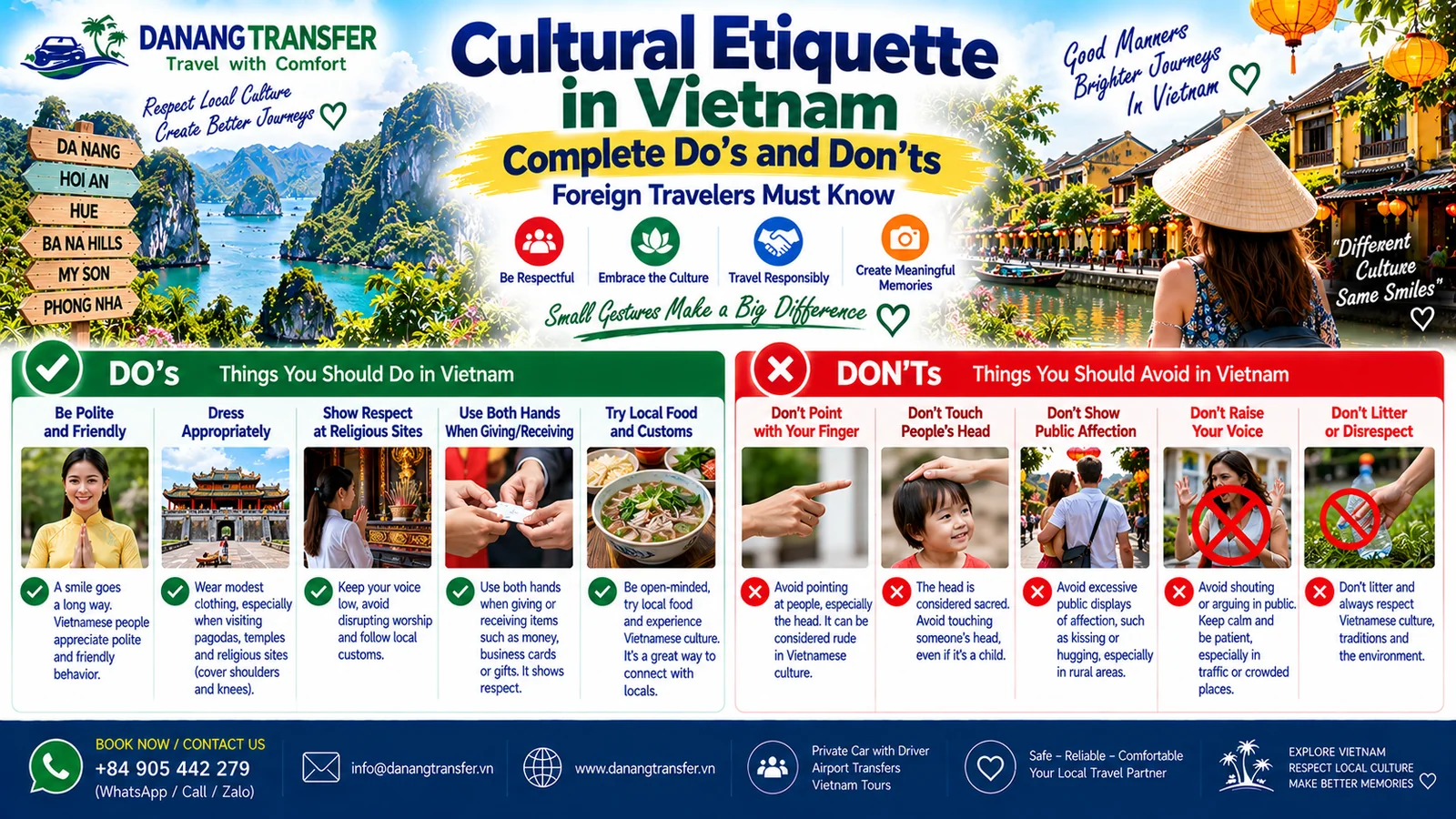
Vietnam is becoming one of Asia’s most loved destinations for food, culture, nature, and friendly people. Yet beyond beaches and street food, Vietnam remains a society deeply rooted in respect, harmony, and tradition. Locals welcome travelers warmly — but knowledge of cultural etiquette helps you blend in naturally and avoid unintended misunderstandings.
This updated guide goes far beyond simple “rules”. You’ll learn why certain behaviors matter, how to show respect in everyday interaction, what to avoid in temples and family homes, how to confidently use chopsticks, and even how to behave in markets, traffic, and rural villages. Whether you’re exploring ancient Hanoi, the lantern-lit streets of Hoi An, or the Mekong riverside, this article prepares you to travel Vietnam gracefully.
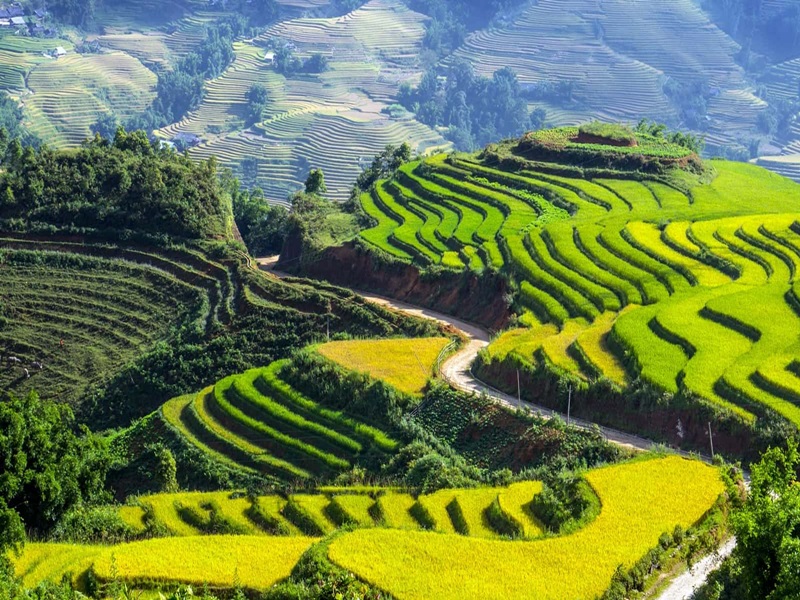
Rice fields at Muong Hoa Valley
⭐ Why Cultural Etiquette Matters in Vietnam
Vietnamese people value harmony, respect, and community. Actions that seem small — offering something with two hands, greeting elders first, or removing shoes at the door — hold deeper meaning.
Understanding etiquette means:
🔹 You build instant trust with locals
A respectful traveler always receives better hospitality and kindness.
🔹 You avoid embarrassment or unintentional offense
Simple gestures like pointing with chopsticks or touching someone’s head can be inappropriate.
🔹 You experience Vietnam more authentically
Locals open their home, share stories, offer food, and treat you as a friend, not a foreigner.
Travel here is more beautiful when respect travels with you.

1. Greeting, Communication & Titles in Vietnam
Greeting is the first moment of connection — and in Vietnam, a good greeting can instantly build respect, friendliness, and social harmony. Unlike Western cultures where first names are used casually, Vietnamese communication places great focus on age hierarchy and status. Showing respect to elders is not just polite — it is cultural foundation.
How to greet politely
The most common way to greet someone is a light handshake combined with a warm smile. This gesture shows sincerity and friendliness without being overly physical. In more traditional or rural settings, a small respectful nod or slight bow of the head may feel even more natural.
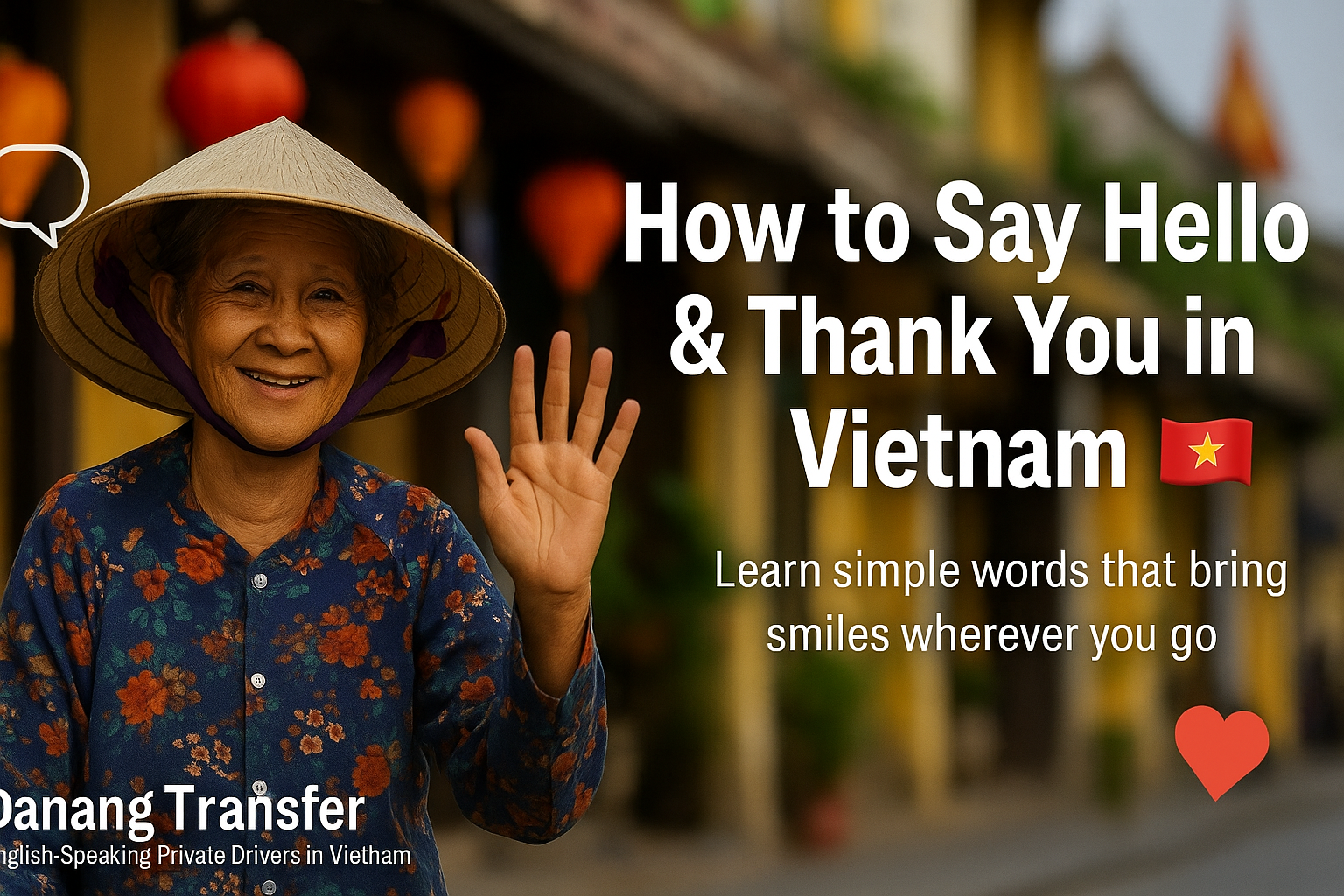
If you want to go further and impress locals, learn a few simple Vietnamese phrases such as:
Xin chào – Hello
Cảm ơn – Thank you
You can explore more useful greetings and pronunciation tips here:
🔗 How to say Hello & Thank You in Vietnam →
https://danangtransfer.vn/en/how-to-say-hello-thank-you-in-vietnam-essential-vietnamese-greetings-for-travelers/
Use Proper Titles — Very Important!
Vietnam rarely calls someone directly by name unless they are close. Instead, people use age-based titles, which show respect and help maintain harmony in communication.
| Title | When to Use |
|---|---|
| Ông | Older man (senior) |
| Bà | Older woman (senior) |
| Anh | Young adult man, slightly older or equal age |
| Chị | Young adult woman, slightly older or equal age |
| Em | Someone younger than you |
If unsure, default to Anh or Chị — polite and safe for most casual interactions.
What to Avoid When Communicating
Even small gestures may carry cultural meaning. To maintain good impression:
❌ Do not:
-
Hug or kiss someone you just met — too intimate for a first encounter
-
Touch someone’s head — considered spiritual and sacred
-
Point at people with fingers or chopsticks
-
Raise your voice, argue loudly, or appear impatient
Vietnamese people value calm tone and gentle speech. Speaking softly is seen as maturity, wisdom, and self-control.
2. How to Dress Appropriately in Vietnam
While Vietnam is modern and relaxed in most tourist destinations, clothing still plays a meaningful role in how respect is perceived. Travelers can comfortably wear casual outfits in cities, beaches, and cafés — however, modest dress becomes very important in temples, historical sites, villages, and family homes.
In Vietnamese culture, your clothing reflects your respect for the people and the place you enter, especially religious or traditional settings. A simple scarf or longer sleeves can make moments of interaction more comfortable, polite, and welcomed.

Where Casual Clothing Is Acceptable
In everyday travel spaces — street food stalls, shopping malls, beaches, or walking streets — shorts, T-shirts, summer dresses, and light breathable clothes are perfectly fine. Vietnam’s tropical humidity makes light clothing practical, especially in cities like Da Nang, Saigon, and Hoi An.
However, “casual” should not be confused with overly revealing.
Dress Respectfully in Sacred or Formal Places
Temples, pagodas, museums, and ancestral houses are places of deep spiritual value. To enter them respectfully:
✔ DO:
-
Wear clothing that covers knees and shoulders
-
Bring a light scarf or shawl to use when needed
-
Choose comfortable, neat outfits — not beachwear
-
Remove hats, sunglasses, and loud accessories upon entering the shrine
Even if no sign is displayed, watching how locals dress is the best guide. When in doubt — choose modest.
What to Avoid When Dressing in Vietnam
Certain outfits may feel normal to tourists but can be considered inappropriate in Vietnamese culture depending on the context.
❌ DON’T:
-
Wear swimsuits, crop tops, or short shorts outside beaches or pools
-
Go shirtless in town or public areas
-
Wear tight or revealing clothing when entering temples, cemeteries, or family homes
-
Dress in flashy attire during rituals, funerals, or ancestral worship events
📌 Rule of thumb: If you wouldn’t wear it to a church or religious ceremony, don’t wear it to a pagoda in Vietnam.
Extra Tips for Dressing Smart While Traveling
-
Pack breathable fabrics like linen or cotton — ideal for humid weather
-
Use sunscreen + light long sleeves to stay both respectful and comfortable
-
Bring temple-appropriate clothes in your day bag to avoid being turned away
-
Dress neatly when invited to a local home — it shows appreciation for the host
A little planning avoids awkward moments and earns admiration everywhere you go.
3. Temple, Pagoda & Spiritual Etiquette in Vietnam
Vietnamese temples and pagodas are not only architectural highlights — they are sacred spaces where people pray, meditate, honor ancestors, and seek blessings for family and life. When visitors enter these spiritual places, respect is shown not just through behavior, but through intention, silence, and awareness.
Understanding temple etiquette helps you move with calmness and humility — two values deeply admired in Vietnamese culture.

What to Do When Visiting Temples & Pagodas
Behaving respectfully inside a place of worship ensures you are welcomed warmly. Small gestures express sincerity and appreciation.
✔ DO:
-
Remove hats, sunglasses, and sometimes shoes before entering the main shrine
-
Walk slowly and quietly, especially when people are praying
-
Hold incense with two hands if you offer it at the altar
-
Step aside for monks or elders, giving them priority
-
Follow the flow of locals — it’s the best guide for what is appropriate
If you are unsure whether a place allows photography or requires shoes to be taken off, simply observe or ask — locals will happily guide you.

Proper Attitude Inside Sacred Spaces
Unlike tourist spots, temples are peaceful and reflective. Visitors are not expected to know rituals, but they are expected to behave mindfully.
-
Speak softly, or avoid conversation entirely
-
Turn your phone to silent mode
-
Pause and take in the calm atmosphere rather than rushing for photos
-
Respect worshippers even if you don’t understand the rituals
-
Avoid standing directly in front of someone praying
In Vietnam, spiritual energy is considered sensitive — your calm presence is a sign of respect.
Behaviors to Avoid in Temples
Certain actions, though common elsewhere, may be perceived as disrespectful or spiritually inappropriate.
❌ DON’T:
-
Touch Buddha statues, altars, prayer objects or donation plates
-
Point your feet toward the altar, monks, or elderly people
-
Sit cross-legged facing the Buddha during prayer time
-
Take selfies or pose suggestively with religious objects
-
Turn your back to the altar while taking photos
📌 Temples are places for humility — photography should never interrupt prayer.
Dress Code for Spiritual Sites
Appropriate clothing matters greatly here. To show respect:
-
Cover shoulders and knees
-
Avoid tight, transparent, or revealing outfits
-
Bring a scarf/shawl as a quick cover-up option
-
Remove hats/caps when entering the inner hall
A small change in clothing can transform how you are perceived inside sacred grounds.
Special Notes for Incense, Offerings & Prayers
If you wish to participate respectfully:
-
Light incense carefully and use both hands when placing it
-
Do not place money directly on statues or sacred objects
-
Donations should be placed in designated boxes
-
Follow local custom rather than improvising your own ritual
You don’t need to be religious to participate — only sincere.
Temples and pagodas are spiritual heartbeats of Vietnam. When you enter gently, listen deeply, and move respectfully, you don’t just visit — you connect.
4. Dining Etiquette & Chopstick Rules (Important!)
Food in Vietnam is more than a meal — it is connection, warmth, hospitality, and a way for locals to welcome you into their culture. Whether you’re eating in a family home, a street-side stall, or a traditional restaurant, understanding basic table manners helps you blend naturally and respectfully.
Chopsticks are the main tool in Vietnamese dining. How you handle them can signal politeness… or unintentionally represent disrespect. This section will guide you through everything you should do — and what you must never do — at the dining table.
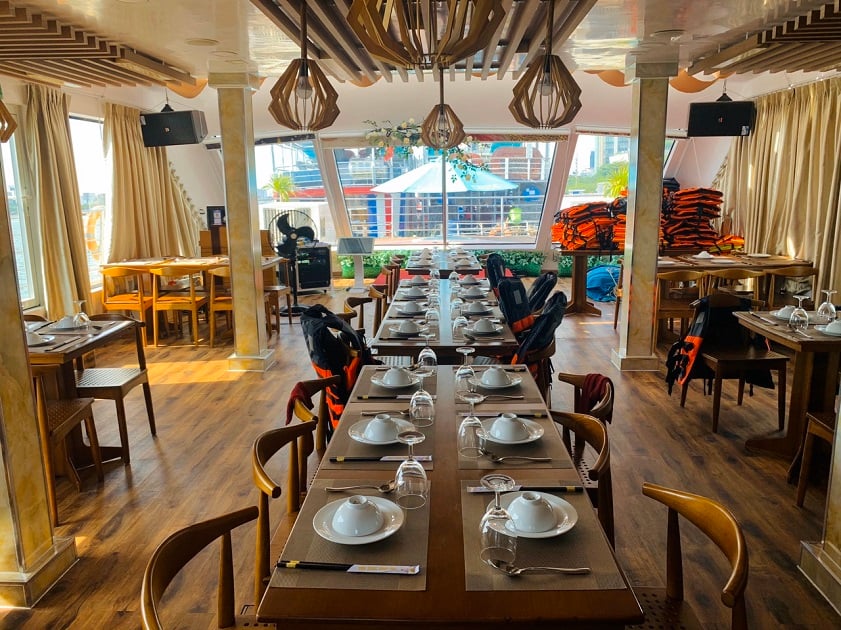
How to Eat Politely in Vietnam
Vietnamese meals are often shared family-style: everyone takes food from common dishes rather than individual plates. Harmony and sharing matter more than eating fast or a lot.
✔ DO:
-
Wait for the eldest person to start eating first
(Respect for seniors is a core cultural value.) -
Hold your bowl close to your mouth when eating rice or noodles
(Perfectly normal — unlike Western dining.) -
Use serving chopsticks or spoons to take food from shared plates
-
Try a little bit of everything — even if you’re unsure
It shows appreciation for the host’s effort. -
Compliment the meal — even a simple “Ngon quá!” (So delicious!) makes locals smile.
Meals in Vietnam are casual, warm, conversational. Slow down and enjoy them.
Very Important Chopstick Rules
These rules may seem small, but breaking them can carry symbolic meaning — especially during ancestral meals or spiritual occasions.
❌ NEVER:
-
Stick chopsticks upright in a bowl of rice
→ This resembles incense at funerals — considered bad luck. -
Use chopsticks to point at people or dishes
→ Seen as impolite and aggressive. -
Stab or spear food with chopsticks
→ Childlike, informal, disrespectful in shared meals. -
Cross chopsticks or drum them on bowls
→ Associated with begging or poor manners. -
Place chopsticks on top of a rice bowl
→ Instead, rest them horizontally on a chopstick holder or bowl edge.
📌 When unsure — observe how locals place their chopsticks and follow their lead.
How to Show Respect at the Table
These small gestures make a big difference:
-
Receive food or drink using two hands, especially from elders
-
Pour tea or water for others at the table—not only for yourself
-
If someone refills your cup, return the gesture later
-
Finish your portion or take only what you can eat
Vietnamese hosts cook generously — eating well is a compliment.

Street Food, Home Meals & Restaurants
Vietnam’s street food culture is world-famous — but etiquette still applies.
| Setting | What to Expect | Tips |
|---|---|---|
| Street food stalls | Casual, fast, delicious | Watch locals for eating style |
| Family meals | Warm, traditional, shared dishes | Always try at least a small taste |
| Restaurants | Menu-based, sometimes shared plates | Offer a toast & enjoy slowly |
In homes, the host often insists you eat more — this is affection, not pressure. You can politely decline with a smile or say:
“Con no rồi, cảm ơn ạ.” (I’m full, thank you.)
A Meal in Vietnam Is Not Just Eating — It’s Connection
Sharing food is sharing friendship. If you’re open, curious, and respectful, dining becomes one of the most meaningful cultural experiences in Vietnam.
Eat with your heart — not just your stomach.
5. Entering Homes & Visiting Local Families
Being invited into a Vietnamese home is more than hospitality — it is trust, friendship, and a gesture of welcome. For many locals, opening their door to you means treating you not as a tourist, but as a guest of honor. Small acts of respect can strengthen that connection instantly.
When you understand how to behave inside a Vietnamese household, even a short visit becomes a warm cultural exchange you will remember forever.
Before Entering the Home
The first moment already matters.
✔ DO:
-
Remove your shoes at the entrance unless the host says otherwise
-
Step over the threshold instead of stepping directly on it
(Some doorsteps have spiritual significance.) -
Offer a small gift — it doesn’t need to be expensive
Fruit, tea, sweets, or a souvenir from your country is perfect.
Vietnamese people value the thought, not the price.
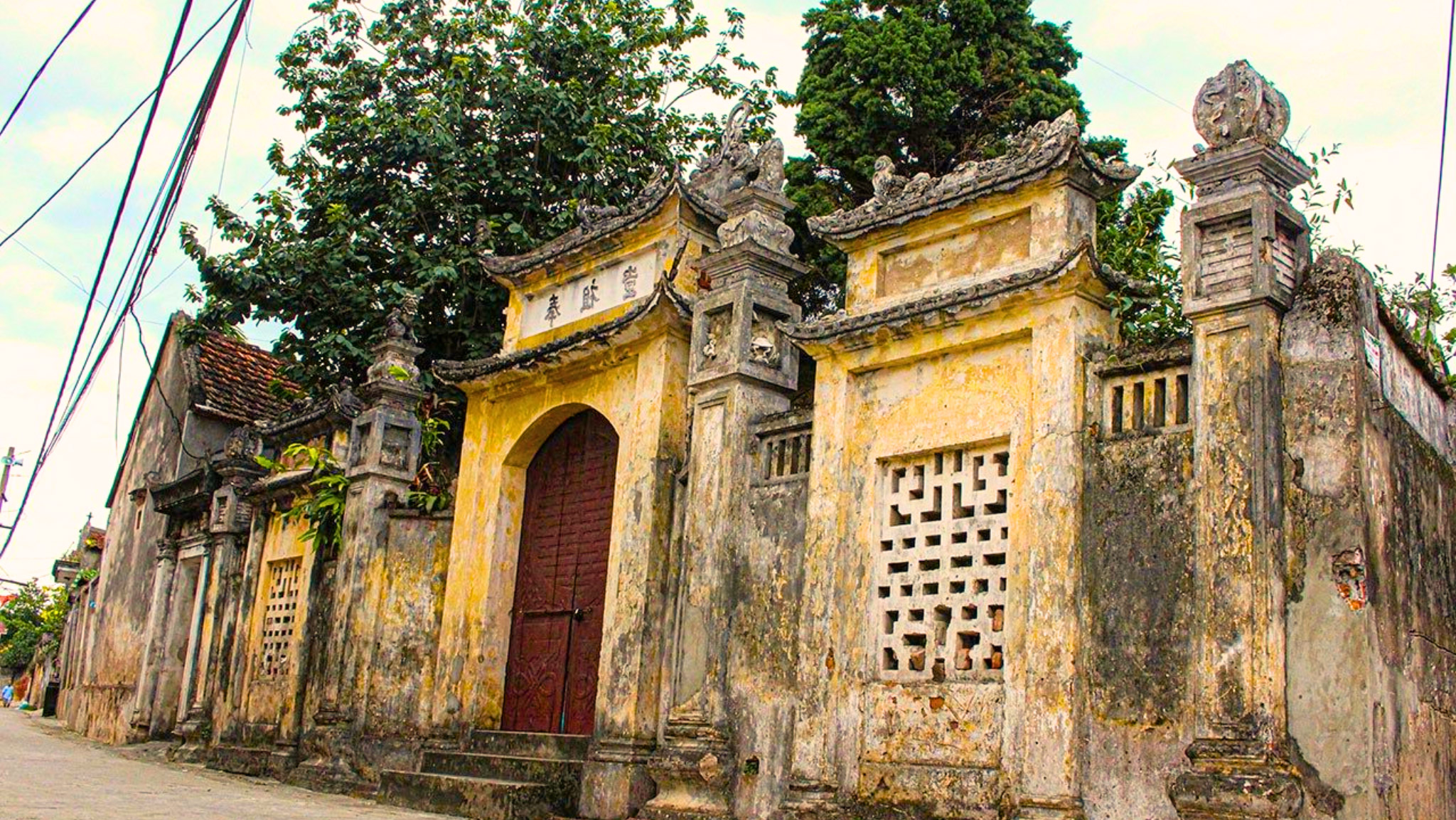
Gifts – A Key Part of Vietnamese Hospitality
Bringing something when visiting a home shows appreciation for the invitation. It reflects respect for the host and their family.
Good gift ideas:
-
Local snacks or fruit from the area you travel through
-
Coffee/tea, wine, or packaged sweets
-
Souvenirs from your home country
-
For families with children — small chocolates or toys
When giving a gift, present it using two hands — polite, humble, appreciated.
💡 Note: Many Vietnamese do not open gifts immediately. This is not disinterest — it’s a cultural practice showing modesty and respect.
Inside the Home — How to Behave Respectfully
Once inside, you may be offered tea, snacks, or even a full meal. Accepting hospitality warmly is one of the best ways to bond culturally.
✔ DO:
-
Wait for the host to invite you to sit
-
Sit where guided — often elders sit first
-
Accept drinks/tea with both hands
-
Compliment the house, the cooking, the atmosphere
-
Eat at least a small portion if food is served
Even if you are full, tasting a little tells the host “I appreciate you.”
Behaviors to Avoid
Certain actions may accidentally cause discomfort.
❌ DON’T:
-
Wander around the house without being invited
-
Touch family altars or religious objects
-
Critique the food, décor, or lifestyle
-
Place feet on furniture or sit overly casually
-
Be overly loud — homes are intimate, not public spaces
📌 The altar in a Vietnamese home is sacred. Admire it, but do not touch, move or photograph without permission.
Conversation Etiquette
Vietnamese hosts love conversation, especially cultural exchange — but some topics are more sensitive.
Safe & friendly topics:
-
Food, travel, hometowns, family, language
-
Traditions like Tet (Lunar New Year)
-
Local life and recommendations
Avoid:
-
Politics, war history, money comparisons, or religion debates
Smiles, curiosity & kindness make the best conversation.
Leaving the Home
When the visit ends:
-
Stand up after elders or when invited
-
Thank the host warmly (Cảm ơn bạn / Cảm ơn cô chú nhiều)
-
A handshake, slight nod, or gentle wave is perfect
-
If you liked the visit, express it — Vietnamese people cherish sincerity
You may even be invited back — that is the highest compliment.
Entering a Vietnamese home is a window into culture, family values, and everyday life. Treat it with respect, warmth, and gratitude — and Vietnam will welcome you not just as a traveler, but as a friend.
6. Social Behaviour in Public
Public behavior in Vietnam is guided by softness, humility, and harmony. While cities like Ho Chi Minh and Hanoi are vibrant and energetic, social interactions remain rooted in respect. How you move, speak, and engage with community spaces affects how locals perceive you — and small gestures of politeness can open many warm smiles along the way.
Vietnam is a culture where people coexist closely: in markets, on sidewalks, on motorbikes, in cafes. The way you blend into that shared space reflects awareness and cultural understanding.

✔ DO: Behave Calmly, Kindly & Mindfully
These simple habits help you interact smoothly in Vietnam:
-
Speak in a calm voice — raising volume can feel confrontational
-
Smile often — a sincere smile is the strongest introduction
-
Queue patiently and respect first-come-first-served order
-
Give way to elderly people, children, monks, and pregnant women
-
Keep your belongings close in crowded areas, especially markets
-
Respect personal space — even in busy environments
Friendly, patient travelers are remembered — and welcomed.
❌ DON’T: Behave Loudly or Disruptively
To avoid misunderstandings, especially in quieter towns or rural areas:
-
Don’t shout or argue publicly — it is seen as loss of dignity
-
Don’t curse, express anger aggressively, or slam objects
-
Avoid PDA (public displays of affection) beyond hand-holding or a light hug
-
Don’t point at people with hands, feet, or chopsticks — gesture instead with open palm
📌 Vietnamese society values harmony — being calm shows strength, not weakness.

Public Affection — Keep It Light
Vietnamese culture is affectionate but modest.
Acceptable:
-
Holding hands
-
Light hugs
-
Friendly physical closeness among family or couples
Best avoided:
-
Kissing passionately in public
-
Touching intimately at tourist sites
-
Sitting very closely to strangers without social context
You may not be judged harshly, but you will stand out.
Public Etiquette in Daily Situations
| Situation | What’s Polite | What to Avoid |
|---|---|---|
| In a café | Speak softly, return cups/trays politely | Disturb others with loud calls/live streams |
| On trains/buses | Offer seats to elderly or kids | Block aisles or place bags on extra seats |
| In parks/beaches | Clean up after eating/picnic | Littering, leaving plastic behind |
| In shops/markets | Smile, greet sellers warmly | Touching items without asking |
| Taking photos in public | Ask permission if shots include people | Filming strangers’ faces without consent |
Simple respect → bigger hospitality in return.
Social Behavior in Urban vs. Rural Vietnam
Urban areas (Hanoi, Da Nang, Saigon):
More modern, used to foreigners, flexible with dress and behavior — but still values politeness.
Rural or ethnic minority regions:
More traditional. You may find more reserved body language, modest dress, and deep spiritual customs. Here, cultural awareness matters even more.
If unsure — observe locals quietly for a moment, then follow their rhythm.
Silence is Also Respect
Vietnamese public etiquette appreciates stillness. In temples, historical sites, and small villages, silence is seen as awareness — a sign you understand the space you are in. It shows that you are not just passing through, but present.
Public behavior is not about rules — it is about harmony. Move gently, speak kindly, smile generously, and Vietnam will respond in the same spirit.
7. Photography Etiquette & Privacy
Vietnam is visually stunning — from lantern-lit alleys, rice terraces, street markets, to old temples and riverside villages. It’s natural for travelers to want to capture every moment. However, photography here is not just about taking a picture — it’s about showing respect to the people and spaces you photograph.
Some images are public, but many scenes involve personal privacy, cultural identity, and spiritual value. Understanding what you can photograph — and when to ask — helps travelers remain respectful and welcomed.

✔ DO: Ask Before Photographing People
Vietnamese people are generally friendly with cameras, especially if you smile or engage first. However, seeking permission is always the proper approach.
Ask especially when photographing:
-
Elderly people
-
Children
-
Local families or rural villagers
-
Hill-tribe ethnic minority groups
-
Artisans or vendors when working
-
Monks or worshippers in temples
A simple gesture — raising your camera, smiling, waiting for a nod — is often enough.
💡 Tip: Learn one helpful phrase —
“Chụp hình được không?” — May I take a photo?
❌ DON’T: Take Photos Without Sensitivity
Some moments should be appreciated, not captured.
Avoid photographing:
-
People in vulnerable or emotional situations
-
Worshippers during prayer — especially close-up shots
-
Government, military zones, or security checkpoints
-
Monks or temples while ceremonies take place
-
Anyone who gestures to decline — always respect the answer
📌 If a moment feels too private or sacred to interrupt, it probably is.
Spiritual Spaces Require Extra Care
Photos in temples and pagodas are allowed in many places, but only with courtesy. Each temple may have different rules.
If allowed to photograph:
-
Turn off flash
-
Move silently and slowly
-
Avoid posing directly in front of Buddha statues
-
Do not sit or lean on altar platforms
-
Never turn your back to the main altar for selfies
A temple is not a background — it is a spiritual presence.
Photographing Children
Vietnamese children are adorable and playful, often happy to appear in photos. But consent still matters — and their guardians decide.
✔ Always ask parents or adults nearby
❌ Do not post children online without awareness of privacy impact
Be responsible with the images you publish.
Drone Photography — Use With Caution
Vietnam has breathtaking drone landscapes, but regulations exist.
You should:
-
Check local rules before flying
-
Keep distance from crowds, temples, military posts
-
Fly respectfully, never intrusive or noisy
In sensitive or historic zones, flying without permission may result in warnings or fines.
Photography is More Beautiful With Respect
A great photograph captures not only the scene, but the humanity behind it. When you ask permission, smile first, wait patiently, and accept “no” politely — you take away more than a picture. You take away a moment of connection.
In Vietnam, the most meaningful photos are the ones taken with kindness.
8. Etiquette in Markets, Street Food & Bargaining
Markets and street food stalls are the heart of Vietnamese daily life: fresh produce, sizzling grills, friendly chatter, and the sound of scooters weaving through narrow alleys. For many travelers, this is where Vietnam feels the most alive. And to truly enjoy it, understanding local etiquette will help you navigate comfortably and respectfully.
Whether you’re slurping phở at a morning stall, buying mangos at a traditional market, or bargaining for souvenirs in Hội An — the way you interact shapes the experience for both you and the vendor.

✔ DO: Engage with Warmth
A smile and polite greeting work magic in Vietnam.
-
Start with a friendly “Xin chào” (hello)
-
If you plan to buy, vendors welcome conversation — ask about ingredients, origin, or recommendations
-
Stand where you don’t block others — markets are compact and busy
-
Pay attention to cleanliness and where locals eat — it’s the best filter
Showing genuine curiosity is often met with kindness, laughter, sometimes even a free sample.
🥢 Street Food Etiquette
Vietnamese street food culture is casual but respectful. To blend in comfortably:
✔ DO:
-
Sit wherever the vendor suggests — seating is often tight
-
Return bowls/cups when you finish (common in street stalls)
-
Pay after eating — most stalls follow eat first, pay later
-
Try local condiments, but taste before adding chili (they can be strong!)
❌ DON’T:
-
Bring outside food to street stalls
-
Block the cooking area while taking photos
-
Rush the vendor — many operate alone, multitasking constantly
Enjoy the pace, savor the steam, listen to the sounds — it’s part of the experience.
🛍 Bargaining — Friendly, Not Aggressive
Bargaining is normal in many markets, especially for souvenirs, clothes, and handicrafts. It’s a conversation, not a competition — approach with lightness and you’ll enjoy it more.
✔ DO:
-
Ask price gently: “Bao nhiêu tiền?” (How much?)
-
Negotiate with a smile — friendliness reduces the price faster
-
If the price doesn’t match your budget, say thank you and walk away politely
-
Keep in mind vendors work long hours and prices support their livelihood
❌ DON’T:
-
Demand extreme discounts
-
Laugh at prices or compare to home country
-
Haggle if you don’t truly intend to buy
📌 Sometimes paying a little more helps a small family business — kindness is also part of travel.
🔥 Useful Bargaining Phrases
| English | Vietnamese |
|---|---|
| How much? | Bao nhiêu tiền? |
| Can you lower the price? | Bớt chút được không? |
| It’s still a bit high. | Giá còn hơi cao. |
| I’ll take it. | Tôi lấy cái này. |
| Thank you! | Cảm ơn nhé! |
Short, simple phrases — but powerful in making connections.
📍 Local Market Etiquette in 10 Seconds
| DO | DON’T |
|---|---|
| Smile first | Touch items roughly |
| Try samples if offered | Bargain aggressively |
| Pay promptly | Block pathways |
| Be patient | Treat vendors as tourist props |
| Enjoy the atmosphere | Photograph people without permission |
Markets are not just selling points — they are community spaces where people live, laugh, exchange stories, and eat together.
Travel with curiosity, respect, and an open stomach — and Vietnam’s markets will open themselves to you fully.
9. Transportation & Street Etiquette in Vietnam
Vietnam’s streets are an adventure of their own — a flowing symphony of motorbikes, honking, street vendors, bicycles, taxis, buses, and pedestrians moving as one. To foreign travelers, it may seem chaotic, but beneath that chaos is rhythm — once you understand it, moving through Vietnam becomes smooth and enjoyable.
Knowing how to walk, ride, book transport, or hire a private driver not only makes travel safer, it also helps you blend into the cultural flow of the street like a local.

🚶♂️ Pedestrian Etiquette — Walk With The Traffic, Not Against It
✔ DO:
-
Walk slowly and steadily — motorbikes will naturally flow around you
-
Make eye contact with drivers when crossing
-
Use pedestrian crossings when available — but do not expect full stops
-
Slightly raise your hand as a signal while crossing — locals do this often
❌ DON’T:
-
Run, rush, or stop abruptly — this confuses riders
-
Expect vehicles to halt the way they do in Western cities
-
Step backward in traffic — extremely dangerous
📌 Think of traffic like a river — move steadily, not unpredictably.

🛵 Motorbike Etiquette — If You Ride, Ride Smart
If you plan to explore by motorbike, do it safely and responsibly.
✔ DO:
-
Wear a helmet at all times (required by law)
-
Drive slowly, especially in narrow streets and intersections
-
Park only in permitted areas (look for Giữ xe)
-
Keep bags secured to your body when riding
❌ DON’T:
-
Ride without experience — Vietnam traffic is unique
-
Drive after drinking — alcohol limit is zero tolerance
-
Weave aggressively or drive like you would back home
👉 If you do not feel confident driving yourself, consider hiring a private driver — more comfortable, safer, and stress-free:
🔗 Private driver in Vietnam – English-speaking car service
https://danangtransfer.vn/en/private-driver-vietnam-hire-english-speaking-driver-car-service/
Or compare before deciding:
🔗 Self-drive vs Car Rental With Driver – Pros & Cons
https://danangtransfer.vn/en/self-drive-vs-car-rental-with-driver-in-vietnam-pros-cons/
🚖 Taxis, Ride-sharing & Private Cars
Grab, Gojek, and taxi brands like Vinasun & Mai Linh operate widely. For long distances, private cars are often the most comfortable option — especially with luggage or multiple passengers.
✔ DO:
-
Confirm price or request meter before the ride starts
-
Check license plate and vehicle model before boarding
-
Keep small bills for easy payment
-
Fasten seatbelt — front and back
❌ DON’T:
-
Accept random offers on the street without checking price
-
Argue loudly over small difference — discuss calmly instead
💡 For pricing reference, see:
🔗 Vietnam Car Rental Price – Complete Guide
https://danangtransfer.vn/en/vietnam-car-rental-price-complete-guide-for-smart-travelers/
🔗 Vietnam Car Rental With Driver – Ultimate Travel Guide
https://danangtransfer.vn/en/vietnam-car-rental-with-driver-the-ultimate-travel-guide/
🔗 How Much Does Car Rental in Vietnam Cost Per Day?
https://danangtransfer.vn/en/how-much-does-car-rental-in-vietnam-cost-per-day/
🚌 Buses & Public Transport
When using buses or intercity coaches:
-
Offer seats to elders, pregnant women & children
-
Keep voice low — buses are shared spaces
-
Prepare small change for tickets or onboard conductors
Simple, flexible, respectful — that’s the local way.
🚲 Rural Roads — Move Slowly, Smile Often
In countryside routes, expect bicycles, animals, walkers & slower pace.
-
Slow down near children or livestock
-
Greet with a smile when passing locals
-
Be patient — rural life flows gently by nature
Respect the landscape and it will embrace you.
Street Etiquette Summary
| DO | DON’T |
|---|---|
| Cross slowly, confidently | Run or stop suddenly in traffic |
| Helmet always when riding | Ride without skill or safety |
| Confirm price before taxi trips | Expect meter automatically runs |
| Speak softly in public transit | Litter or block walkways |
| Choose safe, legal transport | Assume Western rules apply |
Vietnam’s roads look wild — but once you feel the rhythm, you become part of the movement.
10. Quick Cultural Cheat Sheet for Travelers
(A Fast, Friendly & Essential Reminder)**
Vietnamese etiquette is warm, respectful, and subtle. If bạn chưa đọc toàn bộ nội dung phía trên thì chỉ cần ghi nhớ checklist dưới đây là đã đủ để ứng xử đúng trong hầu hết tình huống thực tế khi du lịch Việt Nam.
🧍 General Social Etiquette
| ✔ Do | ❌ Don’t |
|---|---|
| Smile often — it opens every door | Raise your voice or show impatience |
| Greet elders first | Touch someone’s head |
| Use age-based titles (Anh/Chị/Ông/Bà) | Address strangers by first name immediately |
| Use two hands when giving/receiving | Point fingers at people |
👕 Dress Code Reminder
| ✔ Where casual is fine | 🚫 Where modest dress is required |
|---|---|
| Cities, cafés, malls, beaches | Temples, pagodas, shrines |
| Day tours & sightseeing | Traditional homes or ceremonies |
| Summer outfits & shorts | Revealing, transparent or tight clothing |
Tip: Always keep a scarf/shawl in your bag — saves you in temples instantly.
🙏 Temple & Spiritual Etiquette
| ✔ Respectful actions | ❌ Forbidden gestures |
|---|---|
| Walk softly, speak quietly | Touch statues/altars |
| Remove hats, sometimes shoes | Point your feet toward Buddha |
| Offer incense with two hands | Take selfies disturbingly or with back to altar |
Temples are for stillness, not staged photography.
🥢 Dining & Chopstick Manners
| ✔ Good practice | 🚫 Avoid |
|---|---|
| Let elders start first | Stick chopsticks upright in rice (funeral symbol) |
| Hold bowl close when eating | Stabbing food or tapping chopsticks |
| Try everything politely | Wasting food or rejecting dishes abruptly |
| Serve others tea/food too | Eating before others are seated |
“Good manners = good meals” — Vietnamese hosts love seeing you enjoy food.
🏠 Visiting a Local Home
| ✔ Show appreciation | ❌ Avoid disrespect |
|---|---|
| Bring small gift (fruit/tea/sweets) | Wandering without invitation |
| Remove shoes at entrance | Touching family altars |
| Accept tea/snacks with two hands | Criticizing food/decor |
| Compliment house and warmth | Sitting before elders or uninvited |
Home is pride — treat it like stepping into someone’s heart.
🚶 Public & Street Behavior
| ✔ Blend like a local | ❌ Avoid |
|---|---|
| Walk steadily when crossing roads | Running or stopping suddenly |
| Queue patiently | Forcing your way through crowds |
| Low voice in public transport | PDA beyond light affection |
| Respect community pace | Litter or leave plastic behind |
Vietnamese public etiquette = calm, kind, conscious.
📷 Photography & Privacy Quick Rules
| ✔ Ask before shooting people | ❌ Never photograph… |
|---|---|
| Smile, gesture with camera | Worshippers during prayer |
| Shots of sellers, artisans, locals | Military/government areas |
| Try environmental portraits | Private or emotional moments |
| Keep drone respectful & legal | Children without guardian consent |
Great photos come from respect — not intrusion.
🛵 Travel & Transport
| Recommended | Avoid |
|---|---|
| Hire private driver for long routes | Riding motorbike if inexperienced |
| Confirm taxi price upfront | Assuming Grab always fastest |
| Helmet ALWAYS | Crossing roads unpredictably |
| Read car-rental guides before booking | Drinking before driving (zero tolerance) |
🔗 Useful resources you can check:
• Hire Private Driver Vietnam (English-speaking):
https://danangtransfer.vn/en/private-driver-vietnam-hire-english-speaking-driver-car-service/
• Car Rental With Driver Travel Guide:
https://danangtransfer.vn/en/vietnam-car-rental-with-driver-the-ultimate-travel-guide/
If You Remember Only One Thing — Remember This:
Kindness and calmness are the keys to Vietnamese culture.
A smile speaks louder than words.
❓ Frequently Asked Questions (FAQ)
Common questions travelers ask before visiting Vietnam — answered clearly and practically.
1. Are Vietnamese people strict about cultural etiquette?
Not strict — but respectful behavior is always appreciated. Vietnamese people are warm, forgiving, and understand that travelers do not know all customs. A smile, basic courtesy, and good manners are enough to make a wonderful impression.
Even if you make a cultural mistake, locals rarely criticize — your willingness to learn matters more than perfection.
2. Can I wear shorts, tank tops, or casual clothing in Vietnam?
Yes. Casual clothing is normal in most places like markets, tourist streets, and beaches. However, in temples, pagodas, and ancestral homes, modest dress is required — cover shoulders and knees. A light scarf works perfectly as a quick cover-up.
3. Do I need to remove my shoes when entering buildings?
Only in homes, some temples, massage spas, and traditional guesthouses.
If you see shoes at the entrance — remove yours too.
If locals are wearing shoes inside — you may follow.
Rule of thumb: Follow what locals do.
4. Is bargaining rude in Vietnam?
Not at all — bargaining is normal in markets, souvenir shops, and street stalls. Just remember to negotiate politely, with a smile, not aggressively. If the price isn’t right, you can walk away gently without pressure.
Friendly words reduce prices faster than loud haggling.
5. Can I take photos of people freely in Vietnam?
You can, but you should ask first, especially with:
-
Elders
-
Children
-
Hill-tribe communities
-
Worshippers in temples
-
Street vendors busy working
Consent shows respect — and often earns you a better smile.
6. Is English widely spoken in Vietnam?
In large cities like Hanoi, Đà Nẵng, and Ho Chi Minh City, many young people speak basic English, especially in tourism areas. However, in rural regions, English may be limited.
Learning simple Vietnamese greetings (Xin chào, Cảm ơn) makes interactions smoother and appreciated — and often leads to friendlier prices and service.
7. What behavior is considered disrespectful in Vietnam?
Some actions may create discomfort or disrespect:
-
Touching someone’s head
-
Pointing with fingers or chopsticks
-
Public arguing, yelling, or aggressive tone
-
Wearing revealing clothing in temples
-
Sticking chopsticks upright in rice
Avoid these, and you’ll navigate culture with ease.
8. Can I drive myself in Vietnam?
You can, but be cautious — Vietnam’s traffic is busy and unique. If you are not confident riding a motorbike or navigating local roads, hiring a driver is a safer, more comfortable option.
Helpful guides:
🔗 Private Driver Vietnam – English Speaking Service
https://danangtransfer.vn/en/private-driver-vietnam-hire-english-speaking-driver-car-service/
🔗 Self-drive vs Car Rental With Driver
https://danangtransfer.vn/en/self-drive-vs-car-rental-with-driver-in-vietnam-pros-cons/
9. How much does a private car rental cost in Vietnam?
Price varies by city, vehicle type, distance, and with/without driver. For reference:
🔗 Complete Car Rental Price Guide
https://danangtransfer.vn/en/vietnam-car-rental-price-complete-guide-for-smart-travelers/
🔗 Cost Per Day in Vietnam
https://danangtransfer.vn/en/how-much-does-car-rental-in-vietnam-cost-per-day/
A driver-included rental is extremely popular for stress-free travel, airport transfer, and long-distance day trips.
10. What is the single most important rule to remember?
Respect people, speak gently, smile often.
This one habit will carry you further than any detailed rule in this guide.
Conclusion – Travel Vietnam with Respect, Curiosity & Heart
Vietnam is more than landscapes, noodles, lanterns, and rivers — it is a culture woven from kindness, tradition, and community. By understanding etiquette, speaking gently, dressing appropriately, respecting temples, eating with appreciation, and interacting with locals with humility, you will not only see Vietnam — you will feel it.
Travel here is not just movement. It is connection.
The etiquette you’ve learned in this guide is not a rulebook, but a doorway — a way to step into Vietnamese life with grace and be welcomed like a friend rather than a visitor. With a smile, patience, and cultural awareness, every street, every bowl of phở, every conversation, and every sunrise becomes more meaningful.
And when you’re ready to explore even deeper, here are the best next guides to continue your journey:
🌏 Build Your Vietnam Travel Foundations
-
Visa & Entry Requirements (Latest 2026 update)
https://danangtransfer.vn/en/vietnam-visa-guide-2026-complete-evisa-process-requirements-entry-rules/ -
Vietnam Travel Map – Understand regions + routes
https://danangtransfer.vn/en/vietnam-travel-map-the-ultimate-guide-for-travelers/ -
Best Time to Visit Vietnam (Weather by month & region)
https://danangtransfer.vn/en/best-time-to-visit-vietnam-weather-by-month-and-region/ -
Vietnam SIM Card & Internet Guide 2026
https://danangtransfer.vn/en/vietnam-sim-card-internet-guide-2026-best-tourist-plans-networks/
🇻🇳 Explore Region-by-Region
-
Northern Vietnam Guide: Hanoi, Sapa, Ninh Binh
https://danangtransfer.vn/en/northern-vietnam-travel-guide-hanoi-sapa-ninh-binh-highlights/ -
Central Vietnam: Da Nang – Hoi An – Hue
https://danangtransfer.vn/en/central-vietnam-travel-guide-the-ultimate-da-nang-hoi-an-hue-itinerary/ -
Top 12 Places to Visit in Vietnam (North to South)
https://danangtransfer.vn/en/top-12-places-to-visit-in-vietnam-north-to-south-2026-travel-guide/
🧭 Trip Planning for First-Time Travelers
-
How to Plan a 7-Day Vietnam Trip
https://danangtransfer.vn/en/how-to-plan-a-7-day-trip-in-vietnam-itinerary-for-first-timers/ -
Vietnam Transportation Guide 2026
https://danangtransfer.vn/en/vietnam-transportation-guide-2026-best-ways-to-travel-safely-and-comfortably/ -
How Much Should You Tip in Vietnam?
https://danangtransfer.vn/en/how-much-should-you-tip-in-vietnam-the-2026-travelers-guide/ -
How to Say Hello & Thank You in Vietnamese
https://danangtransfer.vn/en/how-to-say-hello-thank-you-in-vietnam-essential-vietnamese-greetings-for-travelers/
🚗 Transportation, Car Rental & Driver Services
If you prefer comfort, time-saving, and stress-free travel — a car with driver is an excellent choice.
-
Private Driver Vietnam – English Speaking
https://danangtransfer.vn/en/private-driver-vietnam-hire-english-speaking-driver-car-service/ -
Car Rental With Driver – Complete Guide
https://danangtransfer.vn/en/vietnam-car-rental-with-driver-the-ultimate-travel-guide/ -
Self-Drive vs Rental With Driver – Pros & Cons
https://danangtransfer.vn/en/self-drive-vs-car-rental-with-driver-in-vietnam-pros-cons/ -
How Much Does Car Rental Cost Per Day?
https://danangtransfer.vn/en/how-much-does-car-rental-in-vietnam-cost-per-day/ -
Is It Worth Renting a Car in Vietnam?
https://danangtransfer.vn/en/is-it-worth-renting-a-car-in-vietnam-a-complete-travel-guide/
Final Note
Travel Vietnam slowly.
Eat with gratitude.
Speak softly.
Smile often.
And you will walk away not only with memories —
but with stories, friendships, and a piece of Vietnam in your heart.