English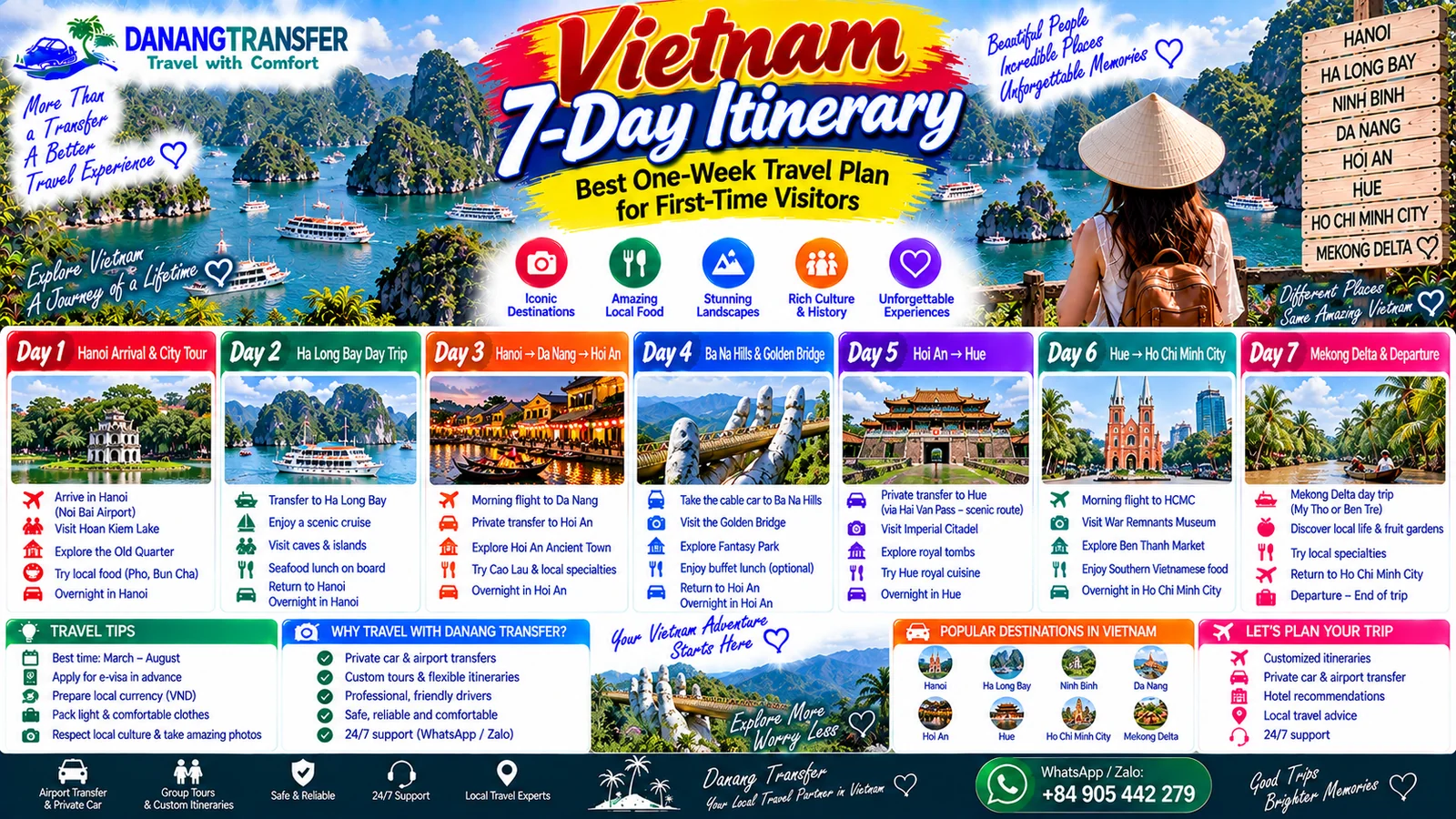
Vietnam is one of Southeast Asia’s most rewarding travel destinations. In just one country, travelers can experience ancient cities, dramatic limestone mountains, emerald rice fields, tropical beaches, UNESCO World Heritage Sites, vibrant street food, and some of the most scenic roads in Asia.
But here is the challenge: Vietnam is long, diverse, and impossible to fully explore in only one week.
From Hanoi in the north to Ho Chi Minh City in the south, the country stretches more than 1,600 kilometers. That means a good Vietnam 7-Day Itinerary must be carefully planned. You need to balance sightseeing, travel time, comfort, and realistic expectations.

This guide is designed especially for first-time visitors who want to experience the best highlights of Vietnam in 7 days without feeling too rushed.
Is 7 Days Enough to Visit Vietnam?
Yes, 7 days is enough for a first introduction to Vietnam, but not enough to see everything.
With one week, you can visit:
- Hanoi
- Ninh Binh or Ha Long Bay
- Da Nang
- Hoi An
- Ho Chi Minh City
- Cu Chi Tunnels or Mekong Delta
This itinerary focuses on Vietnam’s most iconic destinations while keeping travel time reasonable.
If you want a slower trip, you can focus only on Northern Vietnam and Central Vietnam. If you want a classic first-time route, the best plan is:
Hanoi → Ninh Binh / Ha Long Bay → Da Nang → Hoi An → Ho Chi Minh City
This route gives you a strong mix of:
- Culture
- Nature
- History
- Food
- Beaches
- City life
- Local experiences

Best Vietnam 7-Day Itinerary Overview
Here is the recommended route for first-time travelers:
| Day | Destination | Highlights |
|---|---|---|
| Day 1 | Hanoi | Old Quarter, Hoan Kiem Lake, street food |
| Day 2 | Hanoi | Ho Chi Minh Mausoleum, Temple of Literature, Train Street |
| Day 3 | Ninh Binh or Ha Long Bay | Limestone mountains, boat trip, caves |
| Day 4 | Da Nang | Beach, Marble Mountains, Dragon Bridge |
| Day 5 | Hoi An | Ancient Town, lanterns, tailor shops, night market |
| Day 6 | Ho Chi Minh City | War Remnants Museum, Notre Dame Cathedral, Ben Thanh Market |
| Day 7 | Cu Chi Tunnels or Mekong Delta | History or countryside experience |
This itinerary works best for travelers arriving in Hanoi and departing from Ho Chi Minh City. You can also reverse the route if your international flight arrives in Ho Chi Minh City first.

Day 1: Arrival in Hanoi – Explore the Old Quarter
Most travelers begin their Vietnam journey in Hanoi, the capital city and cultural heart of Northern Vietnam.
After arriving at Noi Bai International Airport, transfer to your hotel in the Old Quarter. This area is the best place to stay for first-time visitors because it is close to major attractions, restaurants, cafés, markets, and nightlife.

Walk around Hoan Kiem Lake
Hoan Kiem Lake is one of Hanoi’s most beautiful landmarks.
It is peaceful in the morning, lively in the evening, and perfect for a gentle first walk after a long flight.
Around the lake, you can visit:
- Ngoc Son Temple
- The Huc Bridge
- Turtle Tower
- Weekend walking street
Explore the Old Quarter
Hanoi’s Old Quarter is a maze of narrow streets, local shops, street food stalls, cafés, and traditional houses.
Each street was historically associated with a specific trade, such as silk, silver, herbs, shoes, or paper products.
Today, it is one of the best places in Vietnam to experience local life.
Try Hanoi street food
Your first night in Vietnam should include local food.
Must-try dishes include:
- Pho Bo
- Bun Cha
- Banh Mi
- Egg Coffee
- Fresh spring rolls
- Grilled pork skewers
Hanoi is one of the best food cities in Asia, and the Old Quarter is the perfect place to begin.
Afternoon
- Arrive in Hanoi
- Transfer to hotel
- Rest after your flight
Late afternoon
- Walk around Hoan Kiem Lake
- Visit Ngoc Son Temple
Evening
- Explore the Old Quarter
- Try Bun Cha or Pho
- Drink egg coffee
- Optional: night market or beer street

Day 2: Hanoi City Tour – Culture, History & Local Life
Day 2 is your chance to explore Hanoi more deeply.
The city has a unique blend of Vietnamese tradition, French colonial architecture, wartime history, temples, museums, cafés, and vibrant street scenes.
Ho Chi Minh Mausoleum Complex
Start your morning at the Ho Chi Minh Mausoleum area.
This important site includes:
- Ho Chi Minh Mausoleum
- Presidential Palace
- Ho Chi Minh’s Stilt House
- One Pillar Pagoda
It is one of the most meaningful historical places in Vietnam.
Visitors should dress respectfully and check opening hours in advance because the mausoleum may close on certain days.
Temple of Literature
The Temple of Literature is one of Hanoi’s most beautiful historical sites.
Built in 1070, it is often considered Vietnam’s first national university.
The peaceful courtyards, old trees, stone steles, and traditional architecture make it a must-visit destination for culture lovers.
Hoa Lo Prison Museum
Hoa Lo Prison offers a powerful look into Vietnam’s colonial and wartime history.
Although the museum can be emotional, it gives visitors important context about Vietnam’s past.
Train Street
Hanoi Train Street is one of the city’s most famous photo spots.
Narrow houses, cafés, and train tracks create a unique atmosphere. Access rules can change, so it is best to follow local guidance and only visit safe, permitted areas.
Morning
- Ho Chi Minh Mausoleum Complex
- One Pillar Pagoda
- Temple of Literature
Afternoon
- Lunch with Bun Cha or Pho
- Hoa Lo Prison Museum
- St. Joseph’s Cathedral
- Café break
Evening
- Water Puppet Show
- Old Quarter night walk
- Try local desserts or street snacks
Day 3: Ninh Binh or Ha Long Bay Day Trip
On Day 3, choose between two of Northern Vietnam’s most famous natural destinations: Ninh Binh or Ha Long Bay.
Both are excellent, but they offer different experiences.
Option 1: Ninh Binh – Best for Nature, Culture & Short Travel Time
Ninh Binh is often called “Ha Long Bay on land” because of its limestone mountains, rivers, caves, and peaceful countryside.
It is one of the best day trips from Hanoi and works very well for a 7-day Vietnam itinerary.
Why choose Ninh Binh?
Choose Ninh Binh if you want:
- Shorter travel time from Hanoi
- Boat rides through caves
- Rice fields
- Limestone cliffs
- Temples and pagodas
- Countryside scenery
Best places to visit in Ninh Binh
Trang An
Trang An is a UNESCO-listed landscape complex famous for boat trips through caves, rivers, and karst mountains.
The scenery is peaceful, cinematic, and unforgettable.
Tam Coc
Tam Coc is another famous boat route in Ninh Binh.
It is especially beautiful during rice season, when golden fields surround the river.
Hang Mua Viewpoint
Hang Mua is one of the best viewpoints in Northern Vietnam.
After climbing hundreds of steps, you’ll be rewarded with panoramic views over rice fields, rivers, and limestone peaks.
Hoa Lu Ancient Capital
Hoa Lu was the ancient capital of Vietnam in the 10th and 11th centuries.
It is a great stop for travelers interested in Vietnamese history.
07:30
Depart Hanoi.
10:00
Visit Hoa Lu Ancient Capital.
11:30
Lunch with local specialties.
13:00
Boat trip in Trang An or Tam Coc.
15:30
Climb Hang Mua Viewpoint.
17:00
Return to Hanoi.
19:30
Arrive back in Hanoi.

Option 2: Ha Long Bay – Best for Iconic Scenery
Ha Long Bay is one of Vietnam’s most famous destinations and a UNESCO World Heritage Site.
It is known for thousands of limestone islands rising from emerald water.
Why choose Ha Long Bay?
Choose Ha Long Bay if you want:
- Iconic Vietnam scenery
- Cruise experience
- Limestone islands
- Kayaking
- Caves
- Sea views
For a 7-day itinerary, a day cruise is possible, but an overnight cruise is more relaxing.
However, because your trip is only one week, an overnight cruise may reduce your time in Central or Southern Vietnam.
Suggested Ha Long Bay Day Trip
08:00
Depart Hanoi.
11:30
Arrive at Ha Long Bay.
12:00
Board day cruise and have lunch.
13:30
Visit caves or kayak.
15:30
Enjoy sunset views on the bay.
17:00
Return to harbor.
20:30
Arrive back in Hanoi.

Ninh Binh vs Ha Long Bay: Which Should You Choose?
| Category | Ninh Binh | Ha Long Bay |
|---|---|---|
| Travel time | Shorter | Longer |
| Best for | Countryside, caves, temples | Sea views, cruises, islands |
| Day trip comfort | Easier | More tiring |
| Photography | Excellent | Excellent |
| Cost | Usually lower | Usually higher |
| Best for 7 days | Very practical | Iconic but busier |
For most first-time travelers with only 7 days in Vietnam, Ninh Binh is usually the more practical choice because it saves time and still offers spectacular scenery.
Choose Ha Long Bay if it has always been your dream destination and you don’t mind a longer travel day.
Travel Tip for Day 3
After returning to Hanoi from Ninh Binh or Ha Long Bay, you should take an evening flight to Da Nang or fly the next morning.
If your schedule allows, flying to Da Nang on the evening of Day 3 helps you save time and gives you a full day in Central Vietnam on Day 4.’
After exploring Northern Vietnam, it’s time to head south to one of the country’s most beautiful regions—Central Vietnam. This area combines stunning beaches, UNESCO World Heritage Sites, spectacular mountain roads, and some of the best local cuisine in the country.
Flying from Hanoi to Da Nang takes only 1 hour and 20 minutes, making it the fastest and most convenient way to continue your journey.
Many travelers consider Da Nang and Hoi An the highlight of their entire Vietnam trip because they perfectly combine relaxation, culture, history, and nature.
Day 4: Explore Da Nang – Vietnam’s Most Livable City
Da Nang is often called Vietnam’s most livable city, thanks to its clean streets, beautiful coastline, modern infrastructure, and friendly atmosphere.
Unlike the busy pace of Hanoi or Ho Chi Minh City, Da Nang offers a more relaxed travel experience while still providing plenty of attractions.

Morning: Marble Mountains
Start your day by visiting the famous Marble Mountains, located about 10 km from the city center.
This cluster of five limestone hills is home to:
- Ancient pagodas
- Buddhist temples
- Hidden caves
- Scenic viewpoints
- Stone carving villages
The panoramic views from the top are among the best in Da Nang.
Allow around 2–3 hours for your visit.
Optional Stop: My Khe Beach
After Marble Mountains, head to My Khe Beach, one of Asia’s most beautiful beaches.
Its soft white sand and calm blue water make it an excellent place to relax.
Activities include:
- Swimming
- Beach cafés
- Water sports
- Walking along the promenade
- Fresh coconut by the sea
Even if you don’t swim, it’s worth spending some time enjoying the peaceful atmosphere.
Lunch: Seafood by the Beach
Da Nang is famous for its fresh seafood.
Popular dishes include:
- Grilled lobster
- Steamed crab
- Garlic butter prawns
- Grilled squid
- Clams
- Scallops
- Sea snails
Seafood restaurants along Vo Nguyen Giap Street offer excellent ocean views.
Afternoon: Son Tra Peninsula
If you have extra time, visit Son Tra Peninsula, also known as Monkey Mountain.
This protected nature reserve offers:
- Linh Ung Pagoda
- Lady Buddha Statue
- Ocean viewpoints
- Forest roads
- Rare red-shanked douc langurs (if you’re lucky)
The drive itself is one of the most scenic coastal routes in Vietnam.
Evening: Dragon Bridge & Han River
As night falls, Da Nang transforms into a vibrant riverside city.
Spend your evening exploring:
- Dragon Bridge
- Love Bridge
- Han River
- APEC Park
- Han Night Cruise
If you’re visiting on Friday, Saturday, Sunday, or public holidays, don’t miss the famous Dragon Bridge Fire and Water Show at 9:00 PM.
Suggested Day 4 Schedule
| Time | Activity |
|---|---|
| 08:00 | Marble Mountains |
| 11:30 | Seafood Lunch |
| 13:30 | My Khe Beach |
| 15:30 | Son Tra Peninsula (optional) |
| 18:00 | Dinner |
| 19:30 | Han River Walk |
| 21:00 | Dragon Bridge Fire Show |
Day 5: Explore Hoi An Ancient Town

Only 30 kilometers from Da Nang lies Hoi An, one of Vietnam’s most charming destinations and a UNESCO World Heritage Site.
Unlike modern Da Nang, Hoi An preserves centuries-old architecture, colorful lanterns, riverside cafés, and traditional Vietnamese culture.
Many visitors describe Hoi An as the most photogenic town in Vietnam.
Morning: Coconut Village (Optional)
Before entering the Ancient Town, consider visiting Cam Thanh Coconut Village.
Here you can enjoy:
- Basket boat rides
- Coconut forest
- Local fishermen’s culture
- Traditional performances
This activity is especially popular with families.
Explore Hoi An Ancient Town
Spend several hours wandering through the narrow streets.
Highlights include:
- Japanese Covered Bridge
- Ancient merchant houses
- Chinese Assembly Halls
- Riverside cafés
- Art galleries
- Local temples
The town is best explored on foot.
Every corner offers beautiful photo opportunities.
Lunch: Taste Central Vietnamese Cuisine
Hoi An is famous for several unique dishes.
Don’t miss:
Cao Lau
A noodle dish found almost exclusively in Hoi An.
White Rose Dumplings
Delicate steamed dumplings filled with shrimp.
Mi Quang
Central Vietnam’s famous turmeric noodles.
Banh Mi
Hoi An is home to some of the world’s most famous Vietnamese sandwiches.
Afternoon: Tailor Shops & Shopping
Hoi An is internationally known for custom tailoring.
If you’re interested in having clothing made, you’ll find:
- Suits
- Dresses
- Shirts
- Shoes
- Leather bags
Most tailors can complete orders within 24–48 hours.
Evening: Lantern Town
The atmosphere changes completely after sunset.
Thousands of colorful lanterns illuminate the Ancient Town, creating one of Vietnam’s most magical scenes.
Evening activities include:
- Walking along the Thu Bon River
- Releasing floating lanterns
- Night market shopping
- Riverside cafés
- Traditional music performances
Many visitors consider Hoi An one of the most romantic destinations in Southeast Asia.
Optional Day Trips from Hoi An
Depending on your interests, you may replace some activities with nearby attractions.
Option 1: Ba Na Hills & Golden Bridge
Ba Na Hills is one of Vietnam’s most famous attractions.
Highlights include:
- Golden Bridge
- Cable car
- French Village
- Fantasy Park
- Mountain scenery
Because it requires almost a full day, many travelers choose to visit Ba Na Hills instead of spending an entire day in Da Nang.
Option 2: My Son Sanctuary
History lovers should consider visiting My Son Sanctuary, another UNESCO World Heritage Site.
This ancient Cham temple complex dates back more than 1,000 years.
Early morning is the best time to visit due to cooler temperatures and fewer crowds.
Transportation Between Da Nang & Hoi An
Traveling between Da Nang and Hoi An is quick and convenient, with a distance of approximately 30 km (19 miles) and a travel time of 40–50 minutes, depending on traffic.
Several transportation options are available, but each offers a different level of comfort, flexibility, and convenience.
Private Car with Driver (Recommended)
For first-time visitors, families, couples, and travelers with luggage, a private car with a professional driver is by far the most comfortable and efficient way to travel between Da Nang and Hoi An. It provides door-to-door service, flexible departure times, and the option to stop at popular attractions along the way.
With a private transfer, you can easily customize your journey by visiting attractions such as:
- Marble Mountains
- My Khe Beach
- Dragon Bridge
- Son Tra Peninsula
- Linh Ung Pagoda
before arriving in Hoi An.
Whether you’re looking for a simple hotel transfer, a full-day sightseeing tour, or a multi-day itinerary, you can explore all available services here:
Da Nang Private Car Services
https://danangtransfer.vn/en/danang-private-car/
Da Nang Airport Transfer
If you’re arriving at Da Nang International Airport (DAD), booking an airport transfer in advance is the easiest way to begin your Vietnam adventure.
Instead of waiting in taxi lines or searching for transportation after a long flight, your driver will:
- Meet you at the arrival hall with a name sign
- Assist with your luggage
- Monitor your flight for delays
- Provide a direct transfer to your hotel in Da Nang or Hoi An
This service is especially convenient for international travelers, families with children, and visitors carrying large luggage.
Learn more about airport transportation:
https://danangtransfer.vn/en/danang-private-car/da-nang-airport-transportation/
Why Many Travelers Prefer a Private Car
With only 7 days in Vietnam, every hour matters.
A private car allows you to maximize your itinerary while enjoying a comfortable and stress-free journey.
Benefits include:
- Door-to-door pickup and drop-off
- Flexible departure times
- Modern, air-conditioned vehicles
- Experienced local drivers
- Safe luggage storage
- Scenic photo stops along the route
- No waiting for other passengers
- Ideal for families and small groups
Many visitors combine several attractions into one seamless journey, for example:
Da Nang Airport
↓
Marble Mountains
↓
My Khe Beach
↓
Hoi An Ancient Town
This not only saves time but also transforms a simple transfer into an enjoyable sightseeing experience. For travelers exploring Central Vietnam, a private car offers the perfect balance of convenience, flexibility, and comfort.
Suggested Day 5 Schedule
| Time | Activity |
|---|---|
| 08:00 | Coconut Village (optional) |
| 10:00 | Hoi An Ancient Town |
| 12:00 | Local Lunch |
| 14:00 | Tailor Shopping |
| 16:00 | Riverside Café |
| 18:00 | Dinner |
| 19:00 | Lantern Town |
| 20:00 | Night Market |
| 21:00 | Floating Lantern Experience |
Travel Tips for Central Vietnam
- Wear comfortable walking shoes because Hoi An Ancient Town is best explored on foot.
- Visit Marble Mountains early to avoid midday heat.
- Bring cash for small local shops and street food vendors.
- Carry sunscreen, sunglasses, and a hat during the dry season.
- Book private transportation in advance if traveling during holidays or peak tourist seasons.
- Spend at least one evening in Hoi An after dark—the lantern-lit streets offer an atmosphere unlike anywhere else in Vietnam.
Estimated Budget for Days 4–5
| Expense | Estimated Cost (USD) |
|---|---|
| Hotel | $40–120 |
| Meals | $20–40 |
| Attractions | $20–60 |
| Private Transportation | $20–80 |
| Shopping | Flexible |
A daily budget of $80–200 per person provides a comfortable experience in Central Vietnam, depending on your accommodation and activities.
After discovering the cultural heritage of Northern Vietnam and the beautiful coastline of Central Vietnam, it’s time to experience the country’s vibrant south. Ho Chi Minh City (formerly Saigon) is Vietnam’s largest city, famous for its energetic atmosphere, colonial architecture, fascinating history, world-class street food, and exciting nightlife.
Your final two days combine urban exploration with a choice between two of Southern Vietnam’s most popular excursions: the historic Cu Chi Tunnels or the peaceful Mekong Delta.
Day 6: Discover Ho Chi Minh City
A short domestic flight from Da Nang brings you to Tan Son Nhat International Airport, Vietnam’s busiest airport. After checking into your hotel, begin exploring a city where French colonial landmarks, modern skyscrapers, traditional markets, and hidden cafés exist side by side.
Morning: Independence Palace
Begin your day at the Independence Palace, one of Vietnam’s most significant historical landmarks.
Visitors can explore:
- Presidential offices
- War command rooms
- Underground bunkers
- Historic meeting halls
- Original 1970s interiors
The palace provides valuable insight into modern Vietnamese history.
Notre-Dame Cathedral & Central Post Office
Just a short walk away are two of Ho Chi Minh City’s most iconic French colonial buildings.
Highlights include:
- Notre-Dame Cathedral Basilica
- Saigon Central Post Office
- Beautiful European architecture
- Historic city center
- Excellent photography opportunities
This area perfectly illustrates the city’s blend of Eastern and Western influences.
Nguyen Hue Walking Street
Continue to Nguyen Hue Boulevard, one of the city’s most popular public spaces.
Here you’ll find:
- Modern cafés
- Luxury hotels
- Shopping centers
- Street performances
- Beautiful city views
During the evening, this boulevard becomes one of Ho Chi Minh City’s liveliest gathering places.
Lunch: Taste Southern Vietnamese Cuisine
Southern Vietnam offers a completely different culinary experience from Hanoi and Central Vietnam.
Recommended dishes include:
- Com Tam (Broken Rice)
- Hu Tieu
- Banh Xeo
- Fresh Spring Rolls
- Southern Pho
- Vietnamese Coffee
The city’s food scene is incredibly diverse, ranging from street vendors to Michelin-recommended restaurants.
Afternoon: War Remnants Museum
One of the most visited museums in Vietnam, the War Remnants Museum presents powerful exhibitions documenting the Vietnam War.
Although emotional, it offers important historical context and is highly recommended for travelers interested in Vietnam’s modern history.
Plan approximately 2 hours for your visit.
Ben Thanh Market
No visit to Ho Chi Minh City is complete without exploring Ben Thanh Market.
Popular purchases include:
- Vietnamese coffee
- Local snacks
- Silk products
- Handicrafts
- Souvenirs
- Clothing
Remember that bargaining is common in traditional markets.
Evening: Rooftop Bars & Nightlife
As the sun sets, Ho Chi Minh City transforms into one of Southeast Asia’s most exciting nightlife destinations.
Popular evening activities include:
- Rooftop bars
- Live music venues
- Fine dining
- Walking streets
- Night markets
- River cruises
Whether you prefer a quiet dinner or vibrant nightlife, the city offers something for everyone.
Suggested Day 6 Schedule
| Time | Activity |
|---|---|
| 08:30 | Independence Palace |
| 10:00 | Notre-Dame Cathedral & Central Post Office |
| 12:00 | Local Lunch |
| 14:00 | War Remnants Museum |
| 16:30 | Ben Thanh Market |
| 18:30 | Dinner |
| 20:00 | Nguyen Hue Walking Street & Rooftop Bar |
Day 7: Choose Your Final Adventure
For your last day in Vietnam, choose between two unforgettable experiences.
Option 1: Cu Chi Tunnels
Located about 70 km northwest of Ho Chi Minh City, the Cu Chi Tunnels are one of Vietnam’s most famous historical attractions.
This underground tunnel network stretched over 250 kilometers during the Vietnam War.
Visitors can explore:
- Underground tunnels
- Living quarters
- Hospitals
- Kitchens
- Command centers
- Secret entrances
The tour provides fascinating insight into wartime survival and Vietnamese resilience.
Why Visit Cu Chi?
Choose Cu Chi if you enjoy:
- History
- Military heritage
- Interactive experiences
- Cultural learning
Travel time:
Approximately 1.5–2 hours each way.
Option 2: Mekong Delta
If you prefer nature and local culture, spend your final day exploring the Mekong Delta.
Known as Vietnam’s “Rice Bowl,” this fertile region is famous for:
- Rivers
- Canals
- Fruit orchards
- Floating communities
- Coconut villages
- Traditional handicrafts
The pace of life here is completely different from Ho Chi Minh City.
Typical Mekong Delta Activities
Visitors usually enjoy:
- Boat cruises
- Rowing sampan boats
- Tropical fruit tasting
- Coconut candy workshops
- Local villages
- Traditional music performances
It’s a relaxing way to conclude your Vietnam adventure.
Cu Chi or Mekong Delta?
| Category | Cu Chi Tunnels | Mekong Delta |
|---|---|---|
| Best for | History lovers | Nature lovers |
| Experience | Underground tunnels | River life |
| Photography | Historical sites | Countryside scenery |
| Families | Excellent | Excellent |
| Travel Time | Similar | Similar |
If you have enough time, many tour operators also offer combined Cu Chi + Mekong Delta full-day tours, though the schedule is quite full.
Transportation Between Regions
Efficient transportation is essential for a successful 7-day itinerary.
Recommended travel plan:
- Day 3 Evening: Hanoi → Da Nang (Domestic Flight)
- Day 5 Evening or Day 6 Morning: Da Nang → Ho Chi Minh City (Domestic Flight)
Domestic flights are affordable, frequent, and save many hours compared with trains or long-distance buses.
Within each destination, private cars, taxis, or ride-hailing services provide convenient transportation for sightseeing..
Why This 7-Day Itinerary Works
This itinerary has been designed to balance:
- History
- Culture
- Nature
- Beaches
- Food
- Modern cities
- UNESCO World Heritage Sites
Instead of rushing through too many destinations, it focuses on Vietnam’s highlights while keeping travel time realistic.
In just one week, you’ll experience the country’s incredible diversity—from the centuries-old streets of Hanoi to the lantern-lit beauty of Hoi An and the dynamic energy of Ho Chi Minh City—creating unforgettable memories without feeling overwhelmed.